
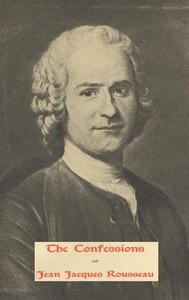
The Confessions of Jean Jacques Rousseau — Complete
Written by Jean-Jacques Rousseau
Chaptra reads alongside you — AI insights, chapter breakdowns and reader discussions for every book. Join free
About this book
Reading guide
Themes, characters and key ideas in The Confessions of Jean Jacques Rousseau — Complete, written by Chaptra AI.
- about 50 hours
- advanced
- introspective
- philosophical
- melancholic
Jean-Jacques Rousseau's "The Confessions" is an unprecedented autobiographical work that seeks to present an unvarnished and complete portrait of its author, from his earliest memories to his later years. Written during the Enlightenment, it chronicles Rousseau's life, his intellectual development, emotional struggles, and the genesis of his revolutionary philosophical ideas. The book explores profound themes of individuality, authenticity, social criticism, and the complex interplay between personal experience and philosophical conviction. Through a deeply introspective and often self-justifying narrative, Rousseau invites readers to witness the formation of a singular mind that profoundly impacted Western thought and the very genre of autobiography.
“I have resolved on an undertaking that has no model, and will have no imitator. I want to show my fellow-men a man in all the truth of nature; and this man will be myself.”
Key themes
- Authenticity vs. Social Corruption
- This is perhaps the central theme, reflecting Rousseau's core philosophical belief that man is naturally good but corrupted by society. He strives throughout his life to live authentically, free from the artificiality and hypocrisy of social conventions, which he frequently critiques. The very act of writing "The Confessions" is an attempt to present an authentic self to the world, unmasked by societal expectations.
- Individuality and Self-Representation
- The book is a monumental exercise in self-representation, where Rousseau attempts to define and justify his unique individual existence. He constantly emphasizes his distinctiveness from others and the importance of his own feelings and experiences as the basis for truth. This theme explores the challenges and complexities of portraying one's inner life and the subjective nature of memory.
- Persecution and Paranoia
- Especially in the later books, Rousseau develops a profound sense of being persecuted and conspired against by his former friends and the broader society. This theme reflects his psychological fragility and the real-world consequences of his controversial ideas, but also his tendency towards self-pity and an inability to accept criticism, leading to a highly subjective and often defensive narrative.
Worth discussing
To what extent can any autobiography be truly 'honest' or 'complete,' as Rousseau claims for his own?
Chapter-by-chapter breakdowns, character arcs and the full thematic analysis come with a free account.
Discussions
No one has started one yet
Questions this book opens up
No discussions yet
Be the first to start a discussion about this book!
Sign up to start the discussionReviews
No reviews yet
Be the first to review this book!