
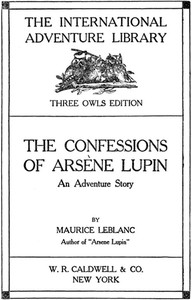
The Confessions of Arsène Lupin
Written by Maurice Leblanc
Chaptra reads alongside you — AI insights, chapter breakdowns and reader discussions for every book. Join free
About this book
Reading guide
Themes, characters and key ideas in The Confessions of Arsène Lupin, written by Chaptra AI.
- about 8 hours
- intermediate
- mysterious
- adventurous
- witty
Maurice Leblanc's "The Confessions of Arsène Lupin" is a captivating collection of early 20th-century adventure stories, chronicling the escapades of its charming and cunning gentleman thief protagonist. Arsène Lupin masterfully navigates a world of crime, deduction, and disguise, consistently outsmarting both law enforcement and other adversaries with his unparalleled wit and ingenuity. Each narrative showcases his unique brand of justice, often targeting the corrupt wealthy while maintaining a surprising moral compass. The collection introduces Lupin through an engaging interplay with a narrative voice, setting the stage for thrilling mysteries involving missing persons, murders, and audacious heists, all presented with Leblanc's distinctive flair for suspense and intrigue.
“"One must be a thief to know a thief, and a gentleman to understand a gentleman."”
Key themes
- Identity and Disguise
- Central to Lupin's character and methods, the theme of identity and disguise explores the fluidity of self and the power of appearances. Lupin constantly adopts new personas, challenging the notion of a fixed identity and highlighting how easily one can manipulate perception. This theme extends beyond mere physical disguise to encompass changes in mannerisms, voice, and even psychological profiles, allowing Lupin to operate undetected in plain sight and achieve his objectives.
- Intellectual Superiority and Cunning
- A core aspect of Lupin's character is his unparalleled intellect, strategic thinking, and cunning. The stories consistently highlight his mental prowess over his adversaries, including the police and other criminals. This theme celebrates the power of the mind, deduction, foresight, and psychological manipulation as the ultimate weapons. Lupin's victories are rarely achieved through brute force but through meticulous planning, ingenious traps, and a deep understanding of human nature.
- Justice vs. Law
- This theme explores the distinction between what is legally permissible and what is morally right. Lupin often operates outside the bounds of the law, committing crimes, but frequently does so to correct injustices, expose corruption, or retrieve ill-gotten gains. He embodies a vigilante figure who believes the legal system is flawed or insufficient to deliver true justice, especially for the common person against the powerful elite. His actions force readers to question the rigidity of the law and consider alternative forms of moral retribution.
Worth discussing
How does Lupin's moral code differ from traditional law, and is he justified in his actions?
Chapter-by-chapter breakdowns, character arcs and the full thematic analysis come with a free account.
Discussions
No one has started one yet
Questions this book opens up
No discussions yet
Be the first to start a discussion about this book!
Sign up to start the discussionReviews
No reviews yet
Be the first to review this book!