
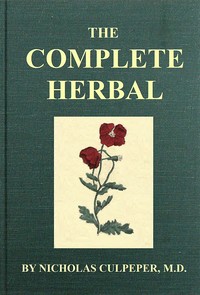
The Complete Herbal: To which is now added, upwards of one hundred additional herbs, with a display of their medicinal and occult qualities physically applied to the cure of all disorders incident to mankind: to which are now first annexed, the English physician enlarged, and key to Physic.
Written by Nicholas Culpeper
Chaptra reads alongside you — AI insights, chapter breakdowns and reader discussions for every book. Join free
About this book
Reading guide
Themes, characters and key ideas in The Complete Herbal: To which is now added, upwards of one hundred additional herbs, with a display of their medicinal and occult qualities physically applied to the cure of all disorders incident to mankind: to which are now first annexed, the English physician enlarged, and key to Physic., written by Chaptra AI.
- about 20 hours
- advanced
- informative
- authoritative
- historical
Nicholas Culpeper's "The Complete Herbal" is a seminal 17th-century medicinal guide that uniquely synthesizes herbalism, astrology, and early medical philosophy. Rejecting the exclusive authority of the medical establishment, Culpeper aimed to democratize knowledge of healing plants, making it accessible to the common person. The work meticulously details the medicinal properties, preparations, and astrological associations of hundreds of herbs, linking celestial influences to human health and disease. It serves as both a practical manual for self-treatment and a profound statement on the importance of empirical observation and personal reason over outdated tradition. Culpeper's assertive tone and comprehensive approach established it as an enduring classic in the history of natural medicine.
“"God created these herbs, for the use of man, and hath given man reason to find out their virtues."”
Key themes
- Empowerment through Knowledge
- Culpeper's primary objective was to democratize medical knowledge, making it accessible to common people who could not afford expensive physicians or understand Latin texts. He believed that understanding the properties of herbs empowered individuals to care for their own health, reducing reliance on a privileged medical elite. This theme is central to the book's purpose and its sustained popularity.
- Natural Healing and Herbalism
- At its core, the book is a comprehensive guide to herbal medicine, asserting the efficacy and availability of natural remedies. Culpeper meticulously details the healing properties of plants, positioning them as God-given tools for maintaining health and curing ailments, often in contrast to the more invasive or less effective practices of professional doctors of his time.
- Astrology and Cosmic Influence
- A distinctive feature of Culpeper's work is its integration of astrological principles into herbal medicine. He believed that each plant was ruled by a specific planet or zodiac sign, and these celestial influences dictated its medicinal properties and its affinity for certain human organs or diseases. This reflects a holistic worldview common in the 17th century, where the microcosm (human body) mirrored the macrocosm (universe).
Worth discussing
How does Culpeper's integration of astrology with herbal medicine reflect the scientific understanding of his era, and what can we learn from this blend of disciplines today?
Chapter-by-chapter breakdowns, character arcs and the full thematic analysis come with a free account.
Discussions
No one has started one yet
Questions this book opens up
No discussions yet
Be the first to start a discussion about this book!
Sign up to start the discussionReviews
No reviews yet
Be the first to review this book!