
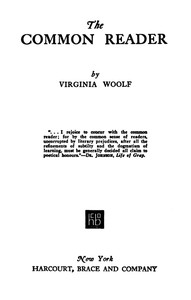
The Common Reader
Written by Virginia Woolf
Chaptra reads alongside you — AI insights, chapter breakdowns and reader discussions for every book. Join free
About this book
Reading guide
Themes, characters and key ideas in The Common Reader, written by Chaptra AI.
- about 8 hours
- advanced
- thought-provoking
- reflective
- intellectual
“The Common Reader” by Virginia Woolf is a seminal collection of literary essays that champions the perspective of the non-specialist reader. Across diverse historical and contemporary literary figures, Woolf explores the profound pleasure and intuitive understanding that an ordinary reader brings to texts, contrasting this with academic criticism. The book argues for the value of reading for personal engagement and the unique insights derived from an unencumbered appreciation of literature. Through elegant prose and keen observation, Woolf invites readers to actively participate in the literary conversation, emphasizing that genuine appreciation transcends scholarly expertise, fostering a more democratic and personal connection to the world of books.
“"The common reader, as Dr. Johnson tells us, reads for his own pleasure, without any other design than of diversifying his hours of leisure, and amusing his imagination."”
Key themes
- Democratization of Literary Criticism
- Woolf fundamentally challenges the elitism of traditional literary criticism, arguing that the 'common reader' – one who reads for pleasure and personal engagement – possesses a unique and valuable insight into literature, often superior to that of the academic scholar. She advocates for a broader, more inclusive approach to literary appreciation, asserting that genuine understanding stems from personal connection rather than specialized knowledge or rigid methodologies.
- The Nature of Literary Value and Judgment
- Woolf consistently questions what makes literature 'good' or enduring. She implies that true value lies not in adherence to critical rules or historical significance alone, but in a work's ability to deeply resonate with a reader, provoke thought, and offer a unique perspective on the human condition. Her essays explore how an author's life, historical context, and stylistic choices contribute to or detract from a work's lasting power.
- The Joy and Transformative Power of Reading
- At its core, 'The Common Reader' is a celebration of reading itself. Woolf articulates the profound pleasure, intellectual stimulation, and emotional resonance that comes from engaging with literature. She posits reading as an active, imaginative, and deeply personal process that can transport, enlighten, and enrich the reader's inner life, offering solace, insight, and a broader understanding of the human experience.
Worth discussing
How does Woolf define the 'common reader,' and how does this definition challenge traditional literary criticism?
Chapter-by-chapter breakdowns, character arcs and the full thematic analysis come with a free account.
Discussions
No one has started one yet
Questions this book opens up
No discussions yet
Be the first to start a discussion about this book!
Sign up to start the discussionReviews
No reviews yet
Be the first to review this book!