
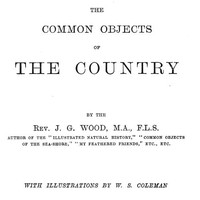
The Common Objects of the Country
Written by J. G. (John George) Wood
Chaptra reads alongside you — AI insights, chapter breakdowns and reader discussions for every book. Join free
About this book
Reading guide
Themes, characters and key ideas in The Common Objects of the Country, written by Chaptra AI.
- about 8 hours
- intermediate
- educational
- observational
- curious
J. G. Wood's "The Common Objects of the Country" is a late 19th-century natural history guide designed to ignite curiosity and foster appreciation for the British countryside's flora and fauna among general readers. Eschewing dense scientific jargon, Wood champions the importance of direct observation, arguing that many overlook the intricate beauty surrounding them. Through engaging descriptions and illustrative anecdotes, the book introduces various creatures, exemplified by its detailed exploration of bats, aiming to dispel common misconceptions and cultivate a genuine, informed love for the natural world. It serves as both an educational primer and a gentle exhortation to connect with one's ecological surroundings.
“Many pass through life unaware of the beauty and complexity around them.”
Key themes
- The Importance of Observation
- This is the central pillar of Wood's work. He argues that true understanding and appreciation of the natural world stems from careful, direct observation rather than passive acceptance or reliance on second-hand information. He challenges readers to actively engage with their surroundings.
- Dispelling Superstition and Misconception
- Wood actively seeks to correct popular errors and superstitions about natural phenomena. By providing factual, albeit non-scientific, descriptions, he aims to replace fear or ignorance with understanding and respect, particularly for creatures often maligned.
- Appreciation and Love for Nature
- Beyond mere instruction, Wood's ultimate goal is to cultivate a deep, genuine affection and respect for the natural world. He presents nature's objects not just as subjects of study, but as sources of beauty, wonder, and ecological value.
Worth discussing
How does Wood's emphasis on 'non-scientific descriptions' shape the reader's understanding and appreciation of nature?
Chapter-by-chapter breakdowns, character arcs and the full thematic analysis come with a free account.
Discussions
No one has started one yet
Questions this book opens up
No discussions yet
Be the first to start a discussion about this book!
Sign up to start the discussionReviews
No reviews yet
Be the first to review this book!