
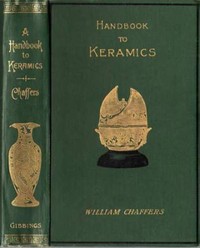
The Collector's Handbook to Keramics of the Renaissance and Modern Periods
Written by William Chaffers
Chaptra reads alongside you — AI insights, chapter breakdowns and reader discussions for every book. Join free
About this book
Reading guide
Themes, characters and key ideas in The Collector's Handbook to Keramics of the Renaissance and Modern Periods, written by Chaptra AI.
- about 12 hours
- advanced
- informative
- academic
- detailed
William Chaffers' "The Collector's Handbook to Keramics of the Renaissance and Modern Periods" is an essential, abridged guide for enthusiasts and collectors of pottery and porcelain from the Renaissance through the 19th century. Drawing from his more extensive work, "The Keramic Gallery," this handbook meticulously details various ceramic styles, with a particular focus on Italian maiolica from regions like Urbino, Gubbio, and Faenza. It provides historical context, stylistic descriptions, and insights into notable artists and manufacturing techniques. The book serves as a practical tool for identification, appreciation, and understanding the rich history of ceramic art, offering a foundational education for those navigating the world of antique ceramics.
“This handbook serves as a companion to 'The Keramic Gallery,' aiming to assist collectors and enthusiasts in identifying and appreciating various ceramic styles.”
Key themes
- Connoisseurship and Collecting
- The central theme revolves around the practice of collecting and the development of connoisseurship in ceramic art. The book aims to educate collectors, providing them with the tools to identify, evaluate, and appreciate pieces, thereby elevating collecting from a mere hobby to an informed pursuit. It implicitly argues for the importance of historical knowledge in the appreciation of art objects.
- Art Historical Documentation and Classification
- This theme highlights the systematic approach to documenting and classifying art objects. Chaffers' work exemplifies the late 19th/early 20th-century drive to categorize and historicize art, providing a framework for understanding the evolution of ceramic styles and techniques. It underscores the importance of rigorous scholarship in establishing provenance and authenticity.
- Material Culture and Regional Identity
- The handbook implicitly explores how ceramic production is intertwined with material culture and regional identity. By detailing the unique characteristics of maiolica from Urbino, Gubbio, and Faenza, it illustrates how local traditions, available resources, and artistic patronage shaped distinct artistic expressions. This theme connects craft to broader socio-cultural contexts.
Worth discussing
How does Chaffers' approach to cataloging ceramics reflect the broader intellectual trends of the late 19th/early 20th century?
Chapter-by-chapter breakdowns, character arcs and the full thematic analysis come with a free account.
Discussions
No one has started one yet
Questions this book opens up
No discussions yet
Be the first to start a discussion about this book!
Sign up to start the discussionReviews
No reviews yet
Be the first to review this book!