
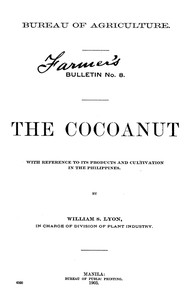
The Cocoanut: With reference to its products and cultivation in the Philippines
Written by William Scrugham Lyon
Chaptra reads alongside you — AI insights, chapter breakdowns and reader discussions for every book. Join free
About this book
Reading guide
Themes, characters and key ideas in The Cocoanut: With reference to its products and cultivation in the Philippines, written by Chaptra AI.
- about 6 hours
- intermediate
- informative
- analytical
- practical
William Scrugham Lyon's "The Cocoanut: With reference to its products and cultivation in the Philippines" serves as a comprehensive technical guide to the cultivation and economic utilization of the coconut palm within the Philippine archipelago during the early 20th century. The book meticulously details botanical aspects, optimal agricultural practices, disease management, and the processing of coconut products like copra and oil. Its primary objective is to provide practical, scientific knowledge to enhance agricultural productivity and foster economic development in the region, reflecting the colonial administration's focus on resource management and export-oriented agriculture. It stands as a significant historical document outlining the state of the coconut industry at the time.
“The cocoanut palm stands pre-eminent among the economic trees of the tropics, offering a multitude of products essential to commerce and native life.”
Key themes
- Economic Importance of Coconuts
- This theme explores the paramount role of the coconut palm and its derivatives (copra, oil, coir, etc.) as a cornerstone of the Philippine economy and a valuable commodity in global trade. The book likely details market dynamics, export potential, and the financial benefits of efficient cultivation, emphasizing its central role in the national product.
- Agricultural Science and Best Practices
- The book meticulously outlines the scientific principles and practical methods for optimal coconut cultivation, covering soil science, plant pathology, irrigation, fertilization, and efficient harvesting techniques. It aims to disseminate knowledge for improving yields, product quality, and overall plantation management through systematic, evidence-based approaches.
- Colonial Economic Development and Resource Management
- This theme implicitly or explicitly addresses the role of coconut cultivation within the broader framework of American colonial policy in the Philippines. It highlights efforts to rationalize and industrialize agriculture to serve both local needs and the economic interests of the colonial power, viewing natural resources as assets to be managed for maximum output and integration into global trade networks.
Worth discussing
How did colonial agricultural policies, as reflected in this book, shape the economic landscape and long-term development of the Philippines?
Chapter-by-chapter breakdowns, character arcs and the full thematic analysis come with a free account.
Discussions
No one has started one yet
Questions this book opens up
No discussions yet
Be the first to start a discussion about this book!
Sign up to start the discussionReviews
No reviews yet
Be the first to review this book!