
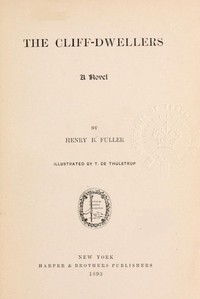
The Cliff-Dwellers: A Novel
Written by Henry Blake Fuller
Chaptra reads alongside you — AI insights, chapter breakdowns and reader discussions for every book. Join free
About this book
Reading guide
Themes, characters and key ideas in The Cliff-Dwellers: A Novel, written by Chaptra AI.
- about 10 hours
- intermediate
- realistic
- critical
- urban
Henry Blake Fuller's "The Cliff-Dwellers" offers a penetrating look into the burgeoning urban landscape of late 19th-century Chicago, using the towering Clifton building as a microcosm of society. The novel follows Walworth Floyd, a young man navigating the intricate social and professional hierarchies tied to the Massachusetts Brass Company, as he grapples with personal aspirations, family expectations, and the complexities of city life. Fuller meticulously details the aspirations and moral compromises of its diverse inhabitants, from affluent businessmen to social climbers, portraying a city driven by ambition and material gain. Through Walworth's experiences, particularly his choice of friends and his eventual marriage, the narrative delves into themes of class, disillusionment, and the evolving American Dream in an industrial age, establishing itself as a foundational work of American urban realism.
“"The Clifton, like some vast, petrified organism, housed a thousand disparate lives, each striving, each dreaming, each ultimately, a tiny cog in the great urban machine."”
Key themes
- Urbanization and Modernity
- The novel powerfully explores the impact of rapid urbanization on individuals and society. The Clifton building serves as a central symbol of this theme, representing the vertical stratification of society, the density of modern life, and the awe-inspiring yet alienating nature of the modern metropolis. Fuller examines how the city shapes ambition, social interaction, and personal identity.
- Social Class and Aspiration
- Fuller meticulously dissects the intricate social hierarchies of Chicago, illustrating how class dictates opportunities, relationships, and personal values. The novel focuses on the relentless pursuit of social advancement, often through marriage or business dealings, and exposes the anxieties and moral compromises inherent in this climb.
- Disillusionment and Moral Compromise
- The novel explores the psychological toll of urban ambition, often leading characters to sacrifice their ideals for material gain or social status. Walworth's journey from idealism to a more pragmatic, if less morally pure, existence is central to this theme, as is the pervasive sense of unfulfilled promises within the city.
Worth discussing
How does the Clifton building function as a character or symbol in the novel? What does its structure and diverse inhabitants reveal about urban society?
Chapter-by-chapter breakdowns, character arcs and the full thematic analysis come with a free account.
Discussions
No one has started one yet
Questions this book opens up
No discussions yet
Be the first to start a discussion about this book!
Sign up to start the discussionReviews
No reviews yet
Be the first to review this book!