
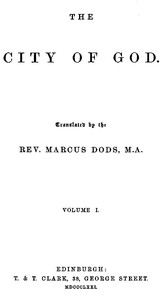
The City of God, Volume I
Written by Saint Augustine
Chaptra reads alongside you — AI insights, chapter breakdowns and reader discussions for every book. Join free
About this book
Reading guide
Themes, characters and key ideas in The City of God, Volume I, written by Chaptra AI.
- about 8 hours
- advanced
- Philosophical
- Didactic
- Serious
Saint Augustine's "The City of God, Volume I" is a monumental theological and philosophical treatise written in response to the 5th-century Sack of Rome by the Goths, which pagans blamed on the rise of Christianity. Augustine meticulously defends the Christian faith, arguing that Rome's calamities stemmed from its moral corruption and the inherent failings of paganism, rather than the abandonment of false gods. He contrasts the fleeting glories of the earthly city, driven by self-love and temporal concerns, with the enduring peace and true virtue found only in the heavenly City of God, founded on the love of God. This volume primarily focuses on refuting pagan accusations, drawing extensively on Roman history, philosophy, and scripture to bolster his apologetic argument and lay the groundwork for a comprehensive Christian worldview.
“Two loves therefore have made two cities: self-love in the one, reaching even to contempt of God; and love of God in the other, reaching even to contempt of self.”
Key themes
- The Two Cities (Civitas Dei vs. Civitas Terrena)
- This is the central metaphor and organizing principle of the entire work. Augustine posits two distinct societies: the City of God, comprised of those who live by faith and love God, seeking eternal peace; and the Earthly City, composed of those who live by human pride and self-love, seeking temporal power and earthly satisfaction. He argues that these two cities are intertwined in this world but fundamentally distinct in their ultimate ends and allegiances.
- Critique of Paganism and Defense of Christianity
- Volume I is largely an *apology* for Christianity, directly refuting pagan accusations that the fall of Rome was due to the abandonment of their gods. Augustine systematically dismantles pagan theology, ethics, and historical claims, demonstrating the moral bankruptcy and inherent contradictions of Roman polytheism. He simultaneously presents Christianity as the true source of virtue, peace, and salvation.
- Divine Providence and Human Free Will
- Augustine grapples with the interplay between God's sovereign plan and humanity's capacity for moral choice. He argues that God's providence guides history, but human beings are still responsible for their actions. This theme is crucial in his defense against pagan claims that God abandoned Rome, asserting instead that God's justice and mercy are always at work, even in suffering.
Worth discussing
How does Augustine's concept of the 'two cities' resonate with or challenge modern understandings of secularism, nationalism, or globalism?
Chapter-by-chapter breakdowns, character arcs and the full thematic analysis come with a free account.
Discussions
No one has started one yet
Questions this book opens up
No discussions yet
Be the first to start a discussion about this book!
Sign up to start the discussionReviews
No reviews yet
Be the first to review this book!