
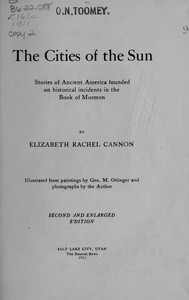
The Cities of the Sun: Stories of Ancient America founded on historical incidents in the Book of Mormon
Written by Elizabeth Cannon Porter
Chaptra reads alongside you — AI insights, chapter breakdowns and reader discussions for every book. Join free
About this book
Reading guide
Themes, characters and key ideas in The Cities of the Sun: Stories of Ancient America founded on historical incidents in the Book of Mormon, written by Chaptra AI.
- about 8 hours
- intermediate
- historical
- dramatic
- moral
Elizabeth Cannon Porter's "The Cities of the Sun" is an early 20th-century collection of historical stories set in ancient America, meticulously founded on incidents and figures from the Book of Mormon. The narratives delve into profound themes of love, power, and sovereignty, often centering on pivotal characters like the despotic King Noah, the defiant prophet Abinadi, and the transformative figure of Alma. The book immediately immerses readers in a dramatic conflict, beginning with King Noah's frivolous court and quickly escalating to the prophet Abinadi's courageous confrontation against royal wickedness and impending judgment. This clash between spiritual conviction and political authority forms the dramatic core of the tales, exploring moral struggles and the consequences of faith and defiance.
“"The sun may warm our courts, Amulon, but it is a woman's smile that truly melts a king's resolve." (King Noah, reflecting his frivolous nature)”
Key themes
- Faith vs. Power
- This theme explores the inherent conflict between divine faith and corrupt temporal power. King Noah's reign embodies the abuse of power for personal gain and suppression of truth, while Abinadi represents the unwavering conviction of faith, even unto death. The narrative highlights how political power, when unguided by moral principles, can lead to tyranny and societal decay, whereas faith, even in the face of overwhelming odds, can inspire transformative change and true freedom.
- Repentance and Redemption
- The theme of repentance and redemption is central to the spiritual message of the book. Abinadi's primary message is a call to repentance for the wicked people of Noah. While King Noah and most of his priests reject this call, Alma's conversion serves as a powerful example of an individual embracing repentance and finding redemption. The narrative illustrates that true change requires acknowledging wrongdoing, turning away from sin, and seeking spiritual renewal, leading to a path of righteousness and divine favor.
- Prophecy and Divine Judgment
- The book emphasizes the role of prophecy as a divine warning and a foretelling of consequences. Abinadi's prophecies are not merely predictions but urgent calls for action, outlining the inevitable judgment that awaits those who persist in wickedness. This theme underscores the belief in a just God who intervenes in human affairs, holding individuals and societies accountable for their choices. The fulfillment of these prophecies, whether through destruction or spiritual renewal, reinforces the authority of the divine word.
Worth discussing
How does Porter use the historical setting of ancient America to explore universal themes of power and morality?
Chapter-by-chapter breakdowns, character arcs and the full thematic analysis come with a free account.
Discussions
No one has started one yet
Questions this book opens up
No discussions yet
Be the first to start a discussion about this book!
Sign up to start the discussionReviews
No reviews yet
Be the first to review this book!