
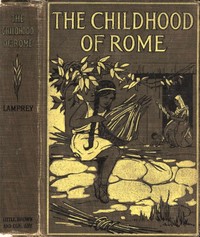
The Childhood of Rome
Written by Louise Lamprey
Chaptra reads alongside you — AI insights, chapter breakdowns and reader discussions for every book. Join free
About this book
Reading guide
Themes, characters and key ideas in The Childhood of Rome, written by Chaptra AI.
- about 8 hours
- intermediate
- historical
- resilient
- ancient
Louise Lamprey's "The Childhood of Rome" is an early 20th-century historical account that delves into the legendary origins and customs of the Italian races foundational to Rome. The narrative centers on Marcia, a young girl adept at basket weaving, whose traditional family life on the 'Mountain of Fire' is dramatically upended by a devastating volcanic eruption. This cataclysm forces Marcia and her family to confront destruction and embark on a journey of resilience and rebuilding. The book aims to evoke the atmosphere of ancient times, exploring themes of human endurance, the power of nature, and the ambiguous nature of historical truth in the formation of early Roman civilization.
“"On the slopes of the Mountain of Fire, life was woven from the sun, the soil, and the strong hands that worked them, each thread a custom, each pattern a tradition passing from elder to child."”
Key themes
- Resilience and Endurance
- This theme explores the human capacity to withstand and recover from catastrophic events. The volcanic eruption serves as the ultimate test of the characters' physical and emotional fortitude, forcing them to adapt, rebuild, and maintain hope in the face of overwhelming destruction.
- Humanity vs. Nature
- The book explicitly highlights the delicate and often violent balance between human civilization and the natural world. The 'Mountain of Fire' embodies nature's dual capacity for life-giving sustenance and devastating destruction, forcing humanity to acknowledge its vulnerability and adapt to its environment.
- Origins of Civilization and Community Building
- This theme explores the foundational processes through which communities are formed, sustained, and rebuilt. The narrative illustrates how shared adversity can forge stronger bonds and how collective effort is essential for establishing the roots of a new society, hinting at the very genesis of Roman civilization.
Worth discussing
How does Lamprey's narrative approach to 'legendary tales' and 'ambiguous historical accuracy' influence our understanding of early Roman history?
Chapter-by-chapter breakdowns, character arcs and the full thematic analysis come with a free account.
Discussions
No one has started one yet
Questions this book opens up
No discussions yet
Be the first to start a discussion about this book!
Sign up to start the discussionReviews
No reviews yet
Be the first to review this book!