
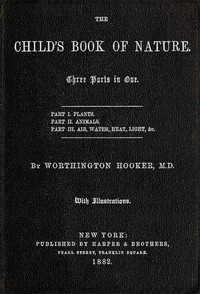
The Child's Book of Nature: Three parts in one
Written by Worthington Hooker
Chaptra reads alongside you — AI insights, chapter breakdowns and reader discussions for every book. Join free
About this book
Read it with a club
Chaptra's ideas and essays clubs — small groups reading the same books and talking as they go.


Books That Changed My Mind
Ideas and essays
- 5 members
- 4 discussions
- Active Sep 11
Not books you enjoyed. Books that moved you off a position you'd genuinely held for years. This is a Chaptra house club — set up and moderated by us to get the conversation going. Open to everyone; jump in anywhere.
Read The Child's Book of Nature: Three parts in one alongside people who are reading it too.
Chaptra Prime — paid clubs, every club feature, and unlimited reading support, for $5 a month or $60 once.
See PrimeReading guide
Themes, characters and key ideas in The Child's Book of Nature: Three parts in one, written by Chaptra AI.
- about 8 hours
- beginner
- educational
- informative
- curious
Worthington Hooker's "The Child's Book of Nature" is a seminal late 19th-century scientific publication designed as an educational tool for families and schools. Structured in three parts covering plants, animals, and broader natural phenomena, the book aims to cultivate children's inherent curiosity through practical observation. Hooker's preface highlights the societal failure to nurture this natural inquisitiveness, advocating for a shift towards incorporating natural sciences, starting with botany, into early education. The work employs simple language and relatable concepts to instruct children, fostering a foundational love and understanding of the natural world and empowering adults to guide this learning process effectively.
“Children are born naturalists; they are innately curious observers of nature.”
Key themes
- Natural Curiosity and Observation
- This is the foundational theme, arguing that children are inherently curious about the natural world and that direct, practical observation is the most effective way to learn. The book is structured entirely around fostering and guiding this innate inquisitiveness.
- The Role of Adult Guidance in Education
- Hooker places significant responsibility on mothers and teachers to facilitate children's learning. He views adults not just as knowledge disseminators, but as guides who can unlock and direct a child's natural potential, addressing 'educational deficiencies' regarding science teaching.
- Scientific Literacy and Understanding Nature
- The ultimate goal of the book is to instill a fundamental understanding of the natural world and cultivate scientific literacy from a young age. By covering plants, animals, and other elements, it aims to provide a comprehensive, albeit introductory, scientific foundation.
Worth discussing
How does Hooker's critique of 19th-century education resonate with or differ from modern educational challenges?
Chapter-by-chapter breakdowns, character arcs and the full thematic analysis come with a free account.
Discussions
No one has started one yet
Questions this book opens up
No discussions yet
Be the first to start a discussion about this book!
Sign up to start the discussionReviews
No reviews yet
Be the first to review this book!