
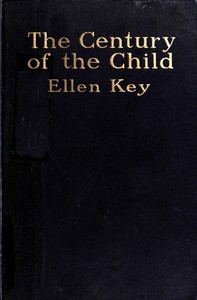
About this book
Reading guide
Themes, characters and key ideas in The Century of the Child, written by Chaptra AI.
- about 10 hours
- advanced
- philosophical
- didactic
- visionary
Ellen Key's "The Century of the Child" is a foundational sociopolitical treatise from the early 20th century, advocating for a radical re-evaluation of children's rights and societal responsibilities towards them. Key posits that the new century's progress hinges on transforming human nature, particularly through a profound understanding of the 'holiness of generation.' She emphasizes children's autonomy and their inherent right to a nurturing environment, challenging traditional notions of parental authority and state intervention. The work explores themes of education, the moral obligations of parenthood, and the societal structures necessary to foster the optimal development of future generations. Key's vision extends to a future where children are revered as sacred beings, capable of influencing their own upbringing and destiny.
“The century of the child will be the century of the complete human being.”
Key themes
- Child Autonomy and Rights
- Key's most revolutionary theme, advocating for children not as property but as independent beings with inherent rights, including the right to choose their parents (conceptually, to be born into conditions of love and respect). This theme underpins her entire argument for societal and educational reform.
- The Holiness of Generation and Parental Responsibility
- Key elevates parenthood from a biological act to a sacred moral and ethical duty. She argues that the act of bringing a child into the world carries profound responsibilities for their physical, intellectual, and spiritual well-being, emphasizing conscious, loving, and intentional parenting.
- Progressive Education and Natural Development
- Key critiques traditional, authoritarian education systems, advocating for a child-centered approach that fosters natural curiosity, creativity, and individual development. She champions learning through experience, play, and a deep connection to nature, rather than rote memorization and strict discipline.
Worth discussing
How does Key's concept of 'the holiness of generation' challenge or align with modern views of parenthood and family planning?
Chapter-by-chapter breakdowns, character arcs and the full thematic analysis come with a free account.
Discussions
No one has started one yet
Questions this book opens up
No discussions yet
Be the first to start a discussion about this book!
Sign up to start the discussionReviews
No reviews yet
Be the first to review this book!