
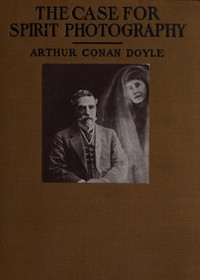
The Case for Spirit Photography: With corroborative evidence by experienced researchers and photographers
Written by Arthur Conan Doyle
Chaptra reads alongside you — AI insights, chapter breakdowns and reader discussions for every book. Join free
About this book
Reading guide
Themes, characters and key ideas in The Case for Spirit Photography: With corroborative evidence by experienced researchers and photographers, written by Chaptra AI.
- about 7 hours
- advanced
- investigative
- earnest
- controversial
Arthur Conan Doyle's "The Case for Spirit Photography" is a fervent early 20th-century defense of spiritualism, specifically the controversial practice of spirit photography. Doyle meticulously presents arguments and purported evidence, including numerous photographic examples, to validate the existence of spirits and their communication through this medium. The book primarily focuses on countering accusations of fraud against the prominent medium William Hope of the Crewe Circle, whom Doyle champions as a genuine conduit for the supernatural. Through detailed case studies and corroborative testimonies from researchers and photographers, Doyle aims to establish the scientific and spiritual legitimacy of these phenomena, urging readers to adopt a sympathetic and open-minded perspective on the spiritualist movement.
“"It is not a question of whether these things are possible, but whether they are true."”
Key themes
- Belief vs. Skepticism
- This is the core conflict of the book. Doyle champions belief in spiritual phenomena, particularly spirit photography, against the prevailing scientific skepticism of his era. He frames the debate as one of open-minded inquiry versus dogmatic materialism, urging readers to suspend disbelief and consider the evidence presented.
- The Nature of Evidence and Truth
- Doyle grapples with what constitutes valid evidence for phenomena that defy conventional scientific explanation. He presents testimonies, photographs, and the inability of experts to debunk certain claims as sufficient proof, challenging the prevailing scientific paradigm's definition of truth and verifiability.
- Grief, Loss, and the Afterlife
- While presented as a scientific defense, the underlying emotional current of the book is the human desire to connect with the deceased and confirm the existence of an afterlife. Spirit photography offered a tangible, albeit contested, means for the bereaved, especially in the wake of immense losses like those from WWI, to find solace and reassurance.
Worth discussing
How does Doyle attempt to apply scientific rigor to the study of spirit photography? What are the strengths and weaknesses of his methodology?
Chapter-by-chapter breakdowns, character arcs and the full thematic analysis come with a free account.
Discussions
No one has started one yet
Questions this book opens up
No discussions yet
Be the first to start a discussion about this book!
Sign up to start the discussionReviews
No reviews yet
Be the first to review this book!