
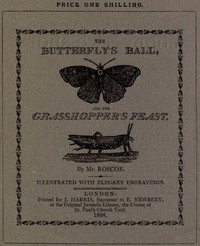
The Butterfly's Ball and the Grasshopper's Feast
Written by William Roscoe
Chaptra reads alongside you — AI insights, chapter breakdowns and reader discussions for every book. Join free
About this book
Reading guide
Themes, characters and key ideas in The Butterfly's Ball and the Grasshopper's Feast, written by Chaptra AI.
- about 8 hours
- beginner
- whimsical
- joyful
- charming
William Roscoe's "The Butterfly's Ball and the Grasshopper's Feast," published around 1808, is a whimsical children's poem that invites readers into a delightful celebration among various insects and small creatures. The narrative begins with an invitation to a grand festive event, where an array of natural inhabitants, from butterflies and grasshoppers to beetles, snails, and glow-worms, gather under an ancient oak tree. The poem charmingly depicts each character's unique contributions and interactions, such as a spider's acrobatic display and a glow-worm's illuminating presence. Through rhythmic verse and vivid imagery, Roscoe crafts a joyful exploration of camaraderie, community, and the simple wonders of the natural world, solidifying its place as a classic in children's literature.
“Come, take up your hat, and away let us haste / To the Butterfly's Ball and the Grasshopper's Feast.”
Key themes
- Camaraderie and Community
- The poem centrally explores the theme of different creatures coming together in harmony to celebrate. Despite their varied species and characteristics, all insects are welcomed and participate in the shared joy of the ball and feast. This illustrates an ideal of peaceful coexistence and the strength found in collective merriment.
- The Wonder and Beauty of Nature
- Roscoe's poem celebrates the natural world, particularly the often-overlooked beauty and unique characteristics of insects. By personifying these creatures, the poem encourages appreciation for the intricate details and diverse forms of life found in nature, transforming the mundane into the magical.
- Imagination and Whimsy
- The poem is a testament to the power of imagination, transforming ordinary insects into characters participating in a grand social event. It encourages children to engage their own imaginative faculties, seeing the world through a lens of wonder and possibility, where even the smallest creatures can have elaborate lives and adventures.
Worth discussing
How does the poem use personification to make the insects relatable and engaging for young readers?
Chapter-by-chapter breakdowns, character arcs and the full thematic analysis come with a free account.
Discussions
No one has started one yet
Questions this book opens up
No discussions yet
Be the first to start a discussion about this book!
Sign up to start the discussionReviews
No reviews yet
Be the first to review this book!