
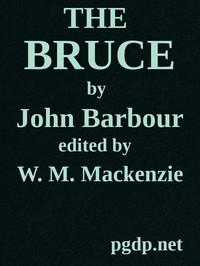
The Bruce
Written by John Barbour
Chaptra reads alongside you — AI insights, chapter breakdowns and reader discussions for every book. Join free
About this book
Reading guide
Themes, characters and key ideas in The Bruce, written by Chaptra AI.
- about 25 hours
- advanced
- Epic
- Heroic
- Patriotic
John Barbour's "The Bruce" is a monumental 14th-century narrative poem chronicling the heroic life and deeds of King Robert I of Scotland, known as Robert the Bruce, during the Scottish Wars of Independence. It serves as a foundational text in Scottish national literature, detailing Bruce's arduous struggle against English domination, from his initial, often-failed attempts to secure the throne to his ultimate triumph at the Battle of Bannockburn and the establishment of Scottish sovereignty. The poem is not merely a historical account but a celebration of valor, perseverance, and the innate human desire for freedom, shaping the national identity and mythos of Scotland. Barbour's work blends historical detail with epic poetry, portraying Bruce as a divinely favored leader embodying the spirit of his people.
“A! fredome is a noble thing!”
Key themes
- Freedom and National Independence
- This is the overarching theme of "The Bruce." Barbour argues for the inherent right of a people to self-determination and glorifies the struggle against foreign domination. Freedom is presented as a divine gift, essential for human dignity and happiness, and worth any sacrifice. The poem portrays the Scottish Wars of Independence as a righteous fight for this fundamental liberty.
- Valor and Chivalry
- Barbour celebrates the martial prowess and moral courage of his heroes, particularly Robert the Bruce and Sir James Douglas. The poem is replete with examples of individual bravery in battle, strategic brilliance, and adherence to a code of honor, even in the brutal context of war. It showcases the ideals of medieval knighthood and leadership.
- Perseverance and Resilience
- Bruce's journey is defined by repeated setbacks, betrayals, and periods of extreme hardship. The poem emphasizes his remarkable ability to endure, learn from his failures, and maintain hope against overwhelming odds. This theme highlights the psychological fortitude required to achieve long-term goals and overcome seemingly insurmountable obstacles.
Worth discussing
How does Barbour define 'fredome' (freedom) in the context of 14th-century Scotland, and how does this concept resonate with modern ideas of liberty?
Chapter-by-chapter breakdowns, character arcs and the full thematic analysis come with a free account.
Discussions
No one has started one yet
Questions this book opens up
No discussions yet
Be the first to start a discussion about this book!
Sign up to start the discussionReviews
No reviews yet
Be the first to review this book!