
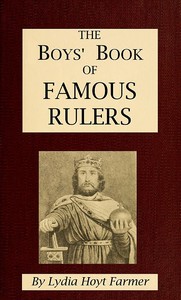
The Boys' Book of Famous Rulers
Written by Lydia Hoyt Farmer
Chaptra reads alongside you — AI insights, chapter breakdowns and reader discussions for every book. Join free
About this book
Reading guide
Themes, characters and key ideas in The Boys' Book of Famous Rulers, written by Chaptra AI.
- about 12 hours
- intermediate
- historical
- educational
- inspiring
Lydia Hoyt Farmer's "The Boys' Book of Famous Rulers" is a late 19th-century historical work designed to introduce young male readers to influential figures from history. Through engaging biographical sketches, the book explores the lives, eras, and customs of renowned rulers, aiming to captivate imaginations and impart historical knowledge. The narrative begins with Agamemnon, king of Mycenae, delving into his pivotal role in the Trojan War, the abduction of Helen, and the complex dynamics of ancient leadership. This foundational account of Agamemnon's pride, honor, and strategic alliances sets the stage for a broader exploration of leadership complexities and ancient warfare, preparing readers for subsequent illustrious rulers.
“"In the annals of ancient glory, few names resound with such power and tragedy as that of Agamemnon, King of Mycenae, leader of the Hellenic hosts."”
Key themes
- Leadership and Responsibility
- The book extensively explores the multifaceted nature of leadership through the lives of famous rulers. It delves into the strategic decisions, moral dilemmas, and personal sacrifices inherent in governing nations and leading armies. Agamemnon's struggles to unite disparate forces and maintain control exemplify the heavy responsibility and often thankless task of command.
- Honor and Reputation
- Central to the narratives of ancient rulers, particularly in the Agamemnon section, is the concept of honor and the preservation of one's reputation. Personal and national honor often serve as primary motivators for war, alliances, and individual actions. The book illustrates how a perceived slight to honor can ignite massive conflicts and how the pursuit of glory defines the heroic ideal.
- The Nature of Power
- The book implicitly explores the various facets of power: its acquisition, its exercise, and its consequences. It examines the different sources of a ruler's power (divine right, military might, political acumen) and how it is wielded to achieve objectives, often with both beneficial and destructive outcomes. The narratives reveal how power can corrupt or uplift, and how it shapes the destiny of nations.
Worth discussing
How does Farmer's portrayal of Agamemnon reflect the values of the late 19th century regarding leadership and heroism?
Chapter-by-chapter breakdowns, character arcs and the full thematic analysis come with a free account.
Discussions
No one has started one yet
Questions this book opens up
No discussions yet
Be the first to start a discussion about this book!
Sign up to start the discussionReviews
No reviews yet
Be the first to review this book!