
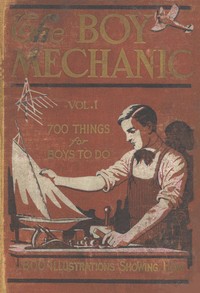
The Boy Mechanic, Volume 1: 700 Things for Boys to Do
Written by Unknown author
Chaptra reads alongside you — AI insights, chapter breakdowns and reader discussions for every book. Join free
About this book
Reading guide
Themes, characters and key ideas in The Boy Mechanic, Volume 1: 700 Things for Boys to Do, written by Chaptra AI.
- about 50 hours
- intermediate
- instructive
- empowering
- nostalgic
The Boy Mechanic, Volume 1: 700 Things for Boys to Do is a classic early 20th-century instructional manual aimed at inspiring ingenuity and practical skills in young boys. Published without a credited author, it compiles an extensive collection of projects, experiments, and crafts ranging from woodworking and electrical devices to outdoor activities and simple machinery. The book serves as a historical snapshot of childhood education and leisure, promoting self-reliance, problem-solving, and hands-on learning through detailed diagrams and straightforward instructions. It reflects a period when practical mechanical aptitude was highly valued and encouraged in the upbringing of young men.
“Every boy likes to make things, and the more useful the things are, the better he likes to make them." (A common sentiment expressed in the prefaces of similar period books, encapsulating the book's philosophy).”
Key themes
- Self-Reliance and Ingenuity
- The book strongly advocates for individuals to solve problems and create solutions using their own hands and intellect, rather than relying solely on manufactured goods. It encourages resourcefulness, making do with available materials, and thinking creatively to achieve desired outcomes.
- Practical Education and Skill Development
- "The Boy Mechanic" serves as a testament to the value of hands-on, experiential learning. It aims to impart practical skills across various domains—woodworking, electricity, mechanics, outdoor survival—that were considered essential for a well-rounded individual, particularly a young man, in the early 20th century.
- Historical Childhood and Gender Roles
- The book is a cultural artifact that illuminates the expectations placed upon boys in the early 20th century. Its explicit targeting of "boys" and the nature of its projects (mechanics, construction, outdoor adventure) reflect prevailing gender norms, where practical, mechanical, and self-sufficient skills were seen as crucial for male development.
Worth discussing
How do the projects and skills taught in "The Boy Mechanic" reflect the technological and social landscape of the early 20th century?
Chapter-by-chapter breakdowns, character arcs and the full thematic analysis come with a free account.
Discussions
No one has started one yet
Questions this book opens up
No discussions yet
Be the first to start a discussion about this book!
Sign up to start the discussionReviews
No reviews yet
Be the first to review this book!