
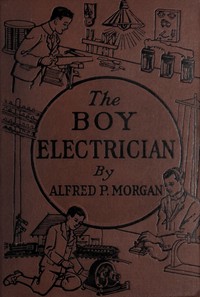
The Boy Electrician
Written by Alfred Powell Morgan
Chaptra reads alongside you — AI insights, chapter breakdowns and reader discussions for every book. Join free
About this book
Reading guide
Themes, characters and key ideas in The Boy Electrician, written by Chaptra AI.
- about 8 hours
- intermediate
- instructive
- empowering
- curious
Alfred Powell Morgan's "The Boy Electrician" is an early 20th-century instructional guide designed to demystify electricity for young experimenters. Eschewing complex, pre-made toys, the book empowers its target audience—curious boys—to build their own electrical devices from readily available materials. Morgan systematically introduces fundamental electrical principles, starting with magnetism, and progresses through a series of hands-on projects, fostering both scientific understanding and practical skills. The work champions self-reliance and the joy of discovery, encouraging readers to become active creators rather than passive consumers of technology. It serves as a foundational text for budding engineers and scientists, emphasizing safety and clarity in its explanations.
“The true joy of discovery lies not in merely observing, but in building it yourself.”
Key themes
- Scientific Literacy and Practical Application
- This is the core theme, emphasizing the importance of not just knowing facts, but understanding the underlying principles of electricity and applying that knowledge to build and create. The book systematically breaks down complex topics into understandable parts, encouraging readers to move from theory to practical construction.
- Empowerment through Self-Reliance and Creation
- The book strongly advocates for moving beyond passive consumption of technology to active creation. It empowers young readers by showing them they can build functional devices themselves, fostering independence, problem-solving skills, and a sense of accomplishment.
- The Wonder of Discovery and Innovation
- Morgan infuses the instructional material with a sense of awe and excitement about the unseen forces of electricity and magnetism. The book aims to inspire a lifelong curiosity and appreciation for scientific principles and the potential for human ingenuity to harness them for innovation.
Worth discussing
How has the approach to teaching science and engineering to young people evolved since the early 20th century, as exemplified by Morgan's book?
Chapter-by-chapter breakdowns, character arcs and the full thematic analysis come with a free account.
Discussions
No one has started one yet
Questions this book opens up
No discussions yet
Be the first to start a discussion about this book!
Sign up to start the discussionReviews
No reviews yet
Be the first to review this book!