
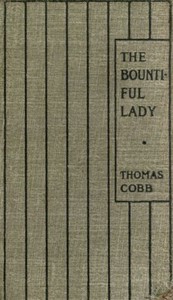
The Bountiful Lady: Or, How Mary was changed from a very Miserable Little Girl to a very Happy One
Written by Thomas Cobb
Chaptra reads alongside you — AI insights, chapter breakdowns and reader discussions for every book. Join free
About this book
Reading guide
Themes, characters and key ideas in The Bountiful Lady: Or, How Mary was changed from a very Miserable Little Girl to a very Happy One, written by Chaptra AI.
- about 5 hours
- beginner
- uplifting
- hopeful
- magical
Thomas Cobb's "The Bountiful Lady" is an early 20th-century children's novel chronicling the transformative journey of Mary Brown, a neglected and impoverished girl. Rescued from her harsh urban reality, Mary finds herself in a wondrous, magical realm where she experiences genuine kindness and comfort for the first time. Guided by the enigmatic 'Bountiful Lady' Evangeline, Mary embarks on a journey of self-discovery, shedding her misery and embracing hope. The story masterfully contrasts the grimness of her former life with the enchanting new world, exploring themes of compassion, imagination, and the profound impact of benevolent intervention on a child's spirit.
“Oh, if only someone, somewhere, would be kind to me!”
Key themes
- Transformation and Redemption
- This is the central theme, tracing Mary's profound journey from a state of utter misery and neglect to one of happiness and well-being. It explores how a change in environment, coupled with genuine kindness, can lead to a complete psychological and emotional overhaul, effectively 'redeeming' a child from a harsh fate.
- The Power of Kindness and Compassion
- The novel explicitly champions the profound impact of kindness and compassionate action. Evangeline, the 'Bountiful Lady,' embodies this theme, demonstrating how simple acts of care and genuine concern can literally transform a life, offering hope where there was none.
- Imagination vs. Reality
- This theme explores the blurred lines between Mary's grim reality and the vivid world of her imagination, which eventually manifests as the 'magical place.' It questions whether the fantastical realm is literal or a metaphorical representation of the profound shift in her perception and circumstances, suggesting imagination can be a powerful tool for survival and transformation.
Worth discussing
How does the novel use the contrast between Mary's initial reality and the magical place to highlight its themes?
Chapter-by-chapter breakdowns, character arcs and the full thematic analysis come with a free account.
Discussions
No one has started one yet
Questions this book opens up
No discussions yet
Be the first to start a discussion about this book!
Sign up to start the discussionReviews
No reviews yet
Be the first to review this book!