
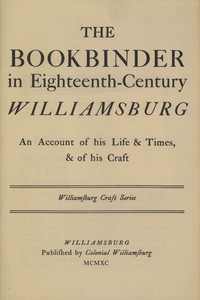
The Bookbinder in Eighteenth-Century Williamsburg: An Account of His Life & Times, & of His Craft
Written by Thomas K. Ford
Chaptra reads alongside you — AI insights, chapter breakdowns and reader discussions for every book. Join free
About this book
Reading guide
Themes, characters and key ideas in The Bookbinder in Eighteenth-Century Williamsburg: An Account of His Life & Times, & of His Craft, written by Chaptra AI.
- about 8 hours
- advanced
- Informative
- Historical
- Detailed
Thomas K. Ford's "The Bookbinder in Eighteenth-Century Williamsburg" offers a meticulously researched historical account of the craft of bookbinding in colonial Virginia. Published in the late 20th century, the book delves into the techniques, materials, and artistry employed by bookbinders like William Parks and William Hunter, highlighting their pivotal role in preserving and disseminating knowledge. It reconstructs the daily lives and professional practices of these artisans, illustrating how each bound volume was a testament to both skilled labor and the burgeoning intellectual landscape of the era. Ford's work serves as an essential resource for understanding the significance of craftsmanship and the societal function of books in 18th-century Williamsburg, drawing upon a wealth of historical records to paint a vivid picture.
“"In eighteenth-century Williamsburg, the bookbinder was not merely a tradesman, but a vital conduit for the flow of knowledge, shaping the very vessels of intellect."”
Key themes
- The Importance of Craftsmanship
- This theme explores the intrinsic value, skill, and dedication required for 18th-century bookbinding. Ford meticulously details the tools, techniques, and artistry involved, emphasizing that bookbinding was not just a trade but a highly specialized craft. The book celebrates the manual dexterity, aesthetic judgment, and deep material knowledge possessed by bookbinders, positioning their work as essential to the production of durable and beautiful objects.
- Preservation of Knowledge
- Ford's analysis underscores bookbinding's critical role in preserving and disseminating knowledge in colonial society. Books were the primary means of storing and transmitting information, and robust bindings ensured their longevity and utility. The bookbinder, therefore, acted as a guardian of intellectual heritage, making texts accessible and enduring for future generations.
- Colonial Intellectual and Cultural Life
- The book places the craft of bookbinding firmly within the broader context of 18th-century Williamsburg's intellectual and cultural development. It illustrates how the demand for books, and thus for bookbinders, reflected the burgeoning literacy, legal systems, religious practices, and educational aspirations of colonial Virginia. The bookbinder's workshop is presented as a crucial node in the intellectual network of the time.
Worth discussing
How does Ford's detailed examination of bookbinding illuminate broader aspects of colonial American society and economy?
Chapter-by-chapter breakdowns, character arcs and the full thematic analysis come with a free account.
Discussions
No one has started one yet
Questions this book opens up
No discussions yet
Be the first to start a discussion about this book!
Sign up to start the discussionReviews
No reviews yet
Be the first to review this book!