
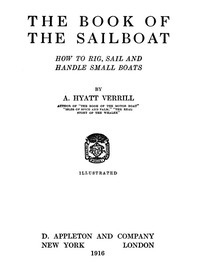
The Book of the Sailboat: How to rig, sail and handle small boats
Written by A. Hyatt (Alpheus Hyatt) Verrill
Chaptra reads alongside you — AI insights, chapter breakdowns and reader discussions for every book. Join free
About this book
Reading guide
Themes, characters and key ideas in The Book of the Sailboat: How to rig, sail and handle small boats, written by Chaptra AI.
- about 12 hours
- intermediate
- informative
- educational
- practical
A. Hyatt Verrill's "The Book of the Sailboat" serves as a foundational early 20th-century guide for understanding, rigging, sailing, and maintaining small boats. Beginning with a rich historical overview of boat evolution from primitive crafts to modern designs, the book meticulously progresses into the practical mechanics of vessel construction and operation. It aims to equip both novice and seasoned mariners with comprehensive knowledge, covering essential components, rigging methods, and fundamental sailing techniques. Verrill's work stands as an informative and engaging resource, bridging historical maritime context with actionable advice for small boat enthusiasts.
“To truly understand a boat, one must first understand its lineage, tracing its form back to the primal crafts that first dared the waters.”
Key themes
- Self-Reliance and Practical Knowledge
- Central to Verrill's approach is the emphasis on the sailor's comprehensive understanding of their vessel and the skills required to operate and maintain it independently. The book instills a philosophy of self-sufficiency, encouraging readers to master rigging, sailing techniques, and basic repairs rather than relying solely on external assistance. This theme underscores the importance of practical wisdom and hands-on competence.
- The Evolution of Craftsmanship and Design
- This theme explores the historical progression of boat building, from rudimentary primitive crafts to more sophisticated designs. Verrill meticulously traces how practical needs, available materials, and human ingenuity have shaped maritime vessels over millennia. It highlights the iterative nature of design and the accumulated knowledge passed down through generations of boat builders and sailors.
- Respect for Nature and Seamanship
- Verrill implicitly conveys a profound respect for the natural elements—wind, water, and weather—and the wisdom required to interact with them safely and effectively. Seamanship is presented not just as a set of techniques but as an art form that demands humility, observation, and an intuitive understanding of the marine environment. This theme encourages a harmonious relationship between the sailor, the boat, and the sea.
Worth discussing
How does Verrill's historical overview of boat development enhance or change your understanding of modern sailboat design?
Chapter-by-chapter breakdowns, character arcs and the full thematic analysis come with a free account.
Discussions
No one has started one yet
Questions this book opens up
No discussions yet
Be the first to start a discussion about this book!
Sign up to start the discussionReviews
No reviews yet
Be the first to review this book!