
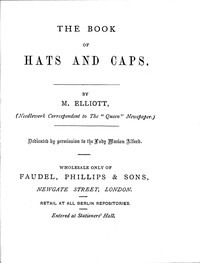
The book of hats and caps
Written by M. Elliott
Chaptra reads alongside you — AI insights, chapter breakdowns and reader discussions for every book. Join free
About this book
Reading guide
Themes, characters and key ideas in The book of hats and caps, written by Chaptra AI.
- about 15 hours
- intermediate
- instructive
- practical
- historical
M. Elliott's "The Book of Hats and Caps" is a seminal late 19th-century needlework manual, offering comprehensive instructions for knitting and crocheting a diverse array of headwear, from traditional Tam o’Shanters to practical cycling caps. It serves as a meticulously detailed guide for textile crafters, emphasizing quality materials and precise techniques for creating durable and stylish items. The book systematically presents patterns, material lists, and step-by-step instructions, catering to both novices and experienced artisans. Beyond its practical utility, it offers a valuable glimpse into the textile crafts and fashion sensibilities of its era, making it a significant historical document for enthusiasts of vintage needlework.
“The careful selection of materials is paramount to the lasting beauty and utility of your finished article.”
Key themes
- The Art and Craft of Textile Production
- This theme explores the intrinsic value and skill involved in creating functional and aesthetic items through knitting and crocheting. The book meticulously details techniques, stitch variations, and shaping methods, underscoring the artistry required to transform yarn into complex forms. It highlights the importance of precision, patience, and understanding of materials, positioning textile work as a respected craft demanding expertise.
- Historical Preservation and Utility
- The book serves as a historical document, preserving late 19th-century textile practices, fashion trends, and the practical needs of the era. It showcases styles like the Tam o’Shanter and cycling caps, reflecting both traditional aesthetics and emerging social activities (like cycling). The emphasis on durable materials and care instructions highlights a period when handmade items were valued for their longevity and function, rather than being disposable.
- Self-Sufficiency and Empowerment through Skill
- This theme explores how acquiring and applying crafting skills can lead to personal empowerment and a sense of self-reliance. By providing the means to create one's own clothing and accessories, the book fosters independence and the satisfaction derived from productive labor. It suggests that mastering a craft offers practical benefits alongside creative fulfillment, enabling individuals to adorn themselves or their families with bespoke, quality items.
Worth discussing
How does 'The Book of Hats and Caps' reflect the role of textile crafts in late 19th-century society?
Chapter-by-chapter breakdowns, character arcs and the full thematic analysis come with a free account.
Discussions
No one has started one yet
Questions this book opens up
No discussions yet
Be the first to start a discussion about this book!
Sign up to start the discussionReviews
No reviews yet
Be the first to review this book!