
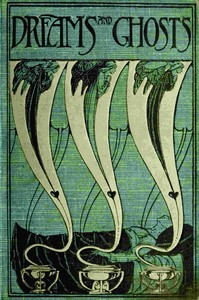
The Book of Dreams and Ghosts
Written by Andrew Lang
Chaptra reads alongside you — AI insights, chapter breakdowns and reader discussions for every book. Join free
About this book
Reading guide
Themes, characters and key ideas in The Book of Dreams and Ghosts, written by Chaptra AI.
- about 8 hours
- intermediate
- mysterious
- scholarly
- eerie
Andrew Lang's "The Book of Dreams and Ghosts" is a late 19th-century collection that delves into the nebulous realm where dreams intersect with supposed supernatural encounters. Lang, a renowned folklorist, meticulously compiles and analyzes various anecdotes of apparitions, shared dreams, and waking visions, presenting them not merely as sensational tales but as subjects for psychological inquiry. The work aims to entertain while simultaneously exploring potential rationales for these phenomena, often suggesting that many ghostly experiences might stem from the complex interplay of human perception, memory, and the subconscious. Through a blend of folklore, personal accounts, and early psychological insights, Lang challenges readers to consider the blurred lines between subjective experience and objective reality.
“The borderland between dream and waking is a territory where many strange things happen, and where the mind often plays its most intricate tricks.”
Key themes
- The Nature of Reality and Perception
- This theme explores how humans construct and interpret their reality, particularly when faced with experiences that defy conventional understanding. Lang constantly questions the reliability of perception, memory, and witness testimony, suggesting that what appears to be an objective external event might often be a subjective internal phenomenon, heavily influenced by the mind's state, expectations, and subconscious activity.
- The Psychology of Belief and Superstition
- Lang delves into why people believe in ghosts, dreams, and other supernatural phenomena. He examines the psychological mechanisms that contribute to such beliefs, including fear, hope, cultural conditioning, and the human desire to find meaning in the inexplicable. He often posits that belief can shape experience, and that the mind's predisposition can interpret ambiguous stimuli as evidence of the supernatural.
- The Supernatural vs. The Natural
- A core tension in the book is the debate between supernatural explanations for strange occurrences and natural, albeit often unknown or misunderstood, causes. Lang operates at the cusp of this divide, seeking rational explanations for seemingly irrational events, while still acknowledging the profound human experience of the 'otherworldly.' He challenges readers to consider if many 'supernatural' events are simply natural phenomena yet to be fully understood by science.
Worth discussing
How does Lang attempt to reconcile scientific skepticism with the pervasive human experience of the supernatural?
Chapter-by-chapter breakdowns, character arcs and the full thematic analysis come with a free account.
Discussions
No one has started one yet
Questions this book opens up
No discussions yet
Be the first to start a discussion about this book!
Sign up to start the discussionReviews
No reviews yet
Be the first to review this book!