
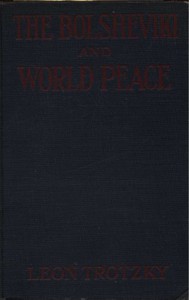
The Bolsheviki and World Peace
Written by Leon Trotsky
Chaptra reads alongside you — AI insights, chapter breakdowns and reader discussions for every book. Join free
About this book
Reading guide
Themes, characters and key ideas in The Bolsheviki and World Peace, written by Chaptra AI.
- about 10 hours
- advanced
- analytical
- polemical
- urgent
Leon Trotsky’s "The Bolsheviki and World Peace" serves as a trenchant analysis of World War I, critiquing the imperialist motives behind the conflict and the catastrophic failure of the Second International's socialist parties to uphold internationalist principles. Written from the perspective of the burgeoning Bolshevik faction, the book argues that the war, far from being a national defense, was an imperialist struggle for global dominance that betrayed the working class. Trotsky meticulously dissects the intricate web of European power politics, particularly the Balkan question, revealing how nationalist aspirations were manipulated to serve capitalist interests. Ultimately, the work champions the necessity of transforming the imperialist war into a worldwide proletarian revolution, advocating for a truly democratic peace achieved through the overthrow of capitalist systems rather than through inter-state negotiations.
“The present war is an imperialist war.”
Key themes
- Imperialism and War
- This is the central theme, arguing that WWI was not a war of national defense but an inevitable outcome of capitalist expansion and rivalry among great powers for global markets and resources. Trotsky meticulously dissects how economic competition drives political conflict and military aggression, leading to the redivision of the world.
- Revolutionary Socialism and World Revolution
- This theme presents Trotsky's proposed solution: the transformation of the imperialist war into a worldwide proletarian revolution. He posits that only through the overthrow of capitalist systems by an international working class can genuine, lasting peace and liberation be achieved. This is the ultimate goal and the driving force behind his arguments.
- Internationalism vs. Nationalism
- Trotsky highlights the profound ideological conflict between the international solidarity of the working class and the divisive force of nationalism. He condemns how nationalism was exploited by ruling classes to mobilize populations for war and how it led to the abandonment of internationalist principles by social democratic parties.
Worth discussing
To what extent was World War I an 'imperialist war' as Trotsky argues, and what are the implications of this interpretation?
Chapter-by-chapter breakdowns, character arcs and the full thematic analysis come with a free account.
Discussions
No one has started one yet
Questions this book opens up
No discussions yet
Be the first to start a discussion about this book!
Sign up to start the discussionReviews
No reviews yet
Be the first to review this book!