
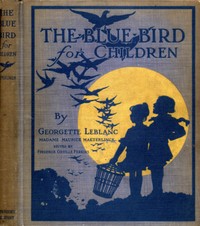
The Blue Bird for Children: The Wonderful Adventures of Tyltyl and Mytyl in Search of Happiness
Written by Maurice Maeterlinck,Georgette Leblanc
Chaptra reads alongside you — AI insights, chapter breakdowns and reader discussions for every book. Join free
About this book
Reading guide
Themes, characters and key ideas in The Blue Bird for Children: The Wonderful Adventures of Tyltyl and Mytyl in Search of Happiness, written by Chaptra AI.
- about 6 hours
- intermediate
- uplifting
- whimsical
- philosophical
Maurice Maeterlinck and Georgette Leblanc's "The Blue Bird for Children" is a timeless allegorical tale about two peasant siblings, Tyltyl and Mytyl, who embark on a magical quest to find the elusive Blue Bird, a symbol of happiness, for a sick child. Guided by a fairy, they journey through enchanted realms where personified objects and elements teach them profound lessons about life, perception, and the true source of joy. The narrative explores themes of gratitude, self-discovery, and the realization that happiness is often found not in distant lands but within the familiar comforts of home and the love shared with others. Ultimately, the children discover that the 'Blue Bird' they seek has been with them all along, transforming their understanding of their own lives.
“"The Blue Bird is not to be found in distant lands; it is often found in our own house, if only we knew how to see it."”
Key themes
- The Elusiveness and True Nature of Happiness
- The central theme of the story, exploring the idea that happiness (the Blue Bird) is not something to be sought in distant, exotic places, but often resides in the familiar, overlooked aspects of one's own life and home. The children's inability to capture a 'blue bird' in magical lands, only to find their own turtledove has turned blue, profoundly illustrates this point. Happiness is presented as a state of mind, a way of perceiving the world, rather than a tangible possession.
- The Power of Perception and Inner Vision
- The story emphasizes that what we see is often a matter of how we choose to look. Tyltyl's magic diamond allows him to perceive the 'souls' of objects and animals, transforming the mundane into the extraordinary. This symbolizes the ability to look beyond surface appearances and appreciate the inner life and spirit of everything around us, suggesting that a shift in perspective can reveal hidden beauty and joy.
- The Value of Everyday Life and Home
- Through their extensive journey to fantastical lands, Tyltyl and Mytyl ultimately discover that the greatest treasures and the true source of happiness were present in their humble home all along. The story elevates the importance of family, familiar surroundings, and the simple comforts of daily life over exotic adventures or material wealth. It's a celebration of 'home' as a sanctuary and a source of profound joy.
Worth discussing
What does the Blue Bird truly symbolize in the story, and why is it so elusive?
Chapter-by-chapter breakdowns, character arcs and the full thematic analysis come with a free account.
Discussions
No one has started one yet
Questions this book opens up
No discussions yet
Be the first to start a discussion about this book!
Sign up to start the discussionReviews
No reviews yet
Be the first to review this book!