
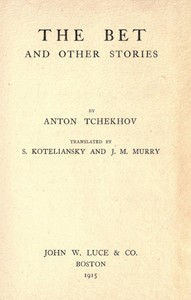
The Bet, and other stories
Written by Anton Pavlovich Chekhov
Chaptra reads alongside you — AI insights, chapter breakdowns and reader discussions for every book. Join free
About this book
Reading guide
Themes, characters and key ideas in The Bet, and other stories, written by Chaptra AI.
- about 6 hours
- intermediate
- philosophical
- melancholy
- introspective
Anton Chekhov's "The Bet, and other stories" is a poignant collection of short fiction, with the titular story serving as a profound exploration of human nature, morality, and the true value of life. "The Bet" chronicles a fifteen-year wager between a wealthy banker and a young lawyer regarding the merits of capital punishment versus life imprisonment, leading the lawyer to voluntary solitary confinement. As the years pass, both men undergo radical transformations, with the lawyer gaining immense philosophical insight and the banker facing financial ruin and moral decay. The story masterfully delves into the psychological toll of isolation and the emptiness of material wealth, ultimately questioning the very foundations of human ambition and knowledge. Chekhov uses this dramatic premise to expose the fragility of human conviction and the unexpected paths to enlightenment.
“"Freedom is better than imprisonment. But for what reason?"”
Key themes
- The Value of Life and Freedom
- The central theme debated at the story's outset, exploring whether capital punishment or life imprisonment is more humane. The lawyer's journey redefines 'freedom' not as physical liberty, but as liberation from worldly desires and illusions. The story questions what truly constitutes a valuable life.
- The Corrupting Influence of Wealth and Materialism
- The story starkly illustrates how the pursuit and possession of wealth can lead to moral decay and desperation. The banker's initial pride in his fortune gives way to anxiety, ruin, and ultimately, the contemplation of murder. Conversely, the lawyer's rejection of wealth signifies his moral and spiritual triumph.
- The Nature of Knowledge and Wisdom
- The lawyer's fifteen years are spent in an intense intellectual journey, consuming vast amounts of knowledge. However, he ultimately finds this knowledge, and indeed all human wisdom, to be empty and illusory, leading to a profound disillusionment rather than fulfillment. This raises questions about the true source of wisdom.
Worth discussing
Discuss the initial debate between the banker and the lawyer. Whose argument do you find more compelling at the outset, and why?
Chapter-by-chapter breakdowns, character arcs and the full thematic analysis come with a free account.
Discussions
No one has started one yet
Questions this book opens up
No discussions yet
Be the first to start a discussion about this book!
Sign up to start the discussionReviews
No reviews yet
Be the first to review this book!