
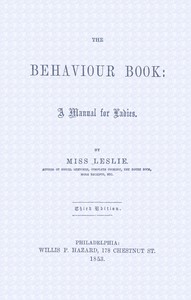
The behaviour book : $b A manual for ladies
Written by Eliza Leslie
Chaptra reads alongside you — AI insights, chapter breakdowns and reader discussions for every book. Join free
About this book
Reading guide
Themes, characters and key ideas in The behaviour book : $b A manual for ladies, written by Chaptra AI.
- about 8 hours
- intermediate
- instructive
- formal
- prescriptive
Eliza Leslie's "The Behaviour Book: A Manual for Ladies" is a mid-19th century guide prescribing proper social etiquette and conduct for women. It meticulously details acceptable behavior across various social scenarios, particularly focusing on the intricate rules of visiting, invitations, and host-guest interactions. The manual emphasizes decorum, social grace, and respectful engagement, reflecting the strict societal norms of its era. By humorously defining different visit lengths and providing practical, detailed guidelines, Leslie aims to cultivate thoughtful and refined social behavior among young women, ensuring they navigate society with grace and propriety.
“"The true lady will always be distinguished by her quiet, unobtrusive manners, and her consideration for the feelings of others."”
Key themes
- Social Etiquette and Decorum
- This is the central theme, exploring the intricate rules and unspoken codes governing social interactions in the mid-19th century. Leslie meticulously details everything from visiting protocols to conversation manners, emphasizing the importance of appearances, respectful conduct, and avoiding social blunders to maintain one's reputation and contribute to harmonious society.
- Gender Roles and Expectations
- The manual explicitly defines and reinforces the expected roles and behaviors for women in 19th-century society. It positions women as the primary custodians of domestic harmony and social grace, responsible for maintaining a genteel atmosphere and facilitating polite interactions. This theme highlights the limitations and responsibilities placed upon women, reflecting the patriarchal norms of the time.
- Class and Social Hierarchy
- The book implicitly and explicitly acknowledges and reinforces the existing social hierarchy. Etiquette served as a means of distinguishing social classes, with proper conduct signaling one's breeding and status. Leslie's advice often assumes a certain level of privilege (e.g., having servants, hosting elaborate visits) and provides guidance on how to interact appropriately with those of different ranks, both above and below.
Worth discussing
How do the social expectations for women in Leslie's era compare to those of today? What has changed, and what, if anything, has remained similar?
Chapter-by-chapter breakdowns, character arcs and the full thematic analysis come with a free account.
Discussions
No one has started one yet
Questions this book opens up
No discussions yet
Be the first to start a discussion about this book!
Sign up to start the discussionReviews
No reviews yet
Be the first to review this book!