
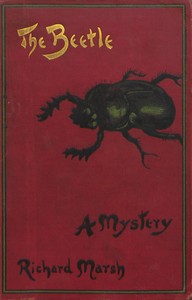
The Beetle: A Mystery
Written by Richard Marsh
Chaptra reads alongside you — AI insights, chapter breakdowns and reader discussions for every book. Join free
About this book
Reading guide
Themes, characters and key ideas in The Beetle: A Mystery, written by Chaptra AI.
- about 8 hours
- intermediate
- dark
- mysterious
- gothic
Richard Marsh's 'The Beetle: A Mystery' is a seminal late 19th-century Gothic novel that plunges into themes of urban decay, supernatural horror, and the anxieties of British imperialism. The narrative begins with Robert Holt, a destitute man who stumbles into a mysterious London house and falls under the terrifying thrall of an enigmatic, shape-shifting entity known as the Beetle. This encounter propels him into a convoluted web of hypnotism, ancient Egyptian curses, and psychological torment, forcing him to confront a powerful figure named Paul Lessingham. The story unfolds through multiple perspectives, revealing a complex plot involving revenge, identity, and the clash between Western civilization and the 'Oriental Other,' culminating in a chilling exploration of fear and control.
“"The thing was there – in the darkness – watching him. He felt its eyes upon him, though he saw nothing."”
Key themes
- The 'Other' and Imperial Anxiety
- The Beetle, with its ambiguous gender, shape-shifting abilities, and origins tied to ancient Egypt, embodies the Victorian fear of the 'Other' – specifically, the perceived threat from non-Western cultures and the anxieties surrounding British imperialism. It challenges Western rationality and societal norms, representing a perceived 'barbaric' force encroaching upon 'civilized' England.
- Psychological Control and Loss of Agency
- A central theme is the terrifying power of the Beetle to exert hypnotic and psychological control over its victims, stripping them of their free will. Characters like Robert Holt are forced into humiliating and dangerous acts, highlighting the fragility of human autonomy and the horror of being a puppet to an external force.
- Urban Decay and Social Anxieties
- The novel uses the grimy, labyrinthine streets of late Victorian London as a backdrop, reflecting anxieties about urban poverty, moral decay, and the hidden dangers lurking beneath the city's respectable facade. The initial plight of Robert Holt highlights the desperation of the working class and the stark inequalities of the era.
Worth discussing
How does 'The Beetle' reflect the anxieties of late Victorian society, particularly concerning imperialism and the 'Other'?
Chapter-by-chapter breakdowns, character arcs and the full thematic analysis come with a free account.
Discussions
No one has started one yet
Questions this book opens up
No discussions yet
Be the first to start a discussion about this book!
Sign up to start the discussionReviews
No reviews yet
Be the first to review this book!