
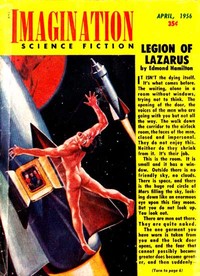
The Beasts in the Void
Written by Paul W. Fairman
Chaptra reads alongside you — AI insights, chapter breakdowns and reader discussions for every book. Join free
About this book
Reading guide
Themes, characters and key ideas in The Beasts in the Void, written by Chaptra AI.
- about 8 hours
- intermediate
- dark
- mysterious
- psychological
Paul W. Fairman's "The Beasts in the Void" is a mid-20th-century science fiction novel that plunges space captain Holloway into a terrifying psychological ordeal after a disastrous deep-space expedition. Haunted by the memory of his deceased wife, Melody, Holloway confronts bizarre creatures that materialize, seemingly born from the collective fears and desires of himself and his crew. As his passengers succumb to a trance, Holloway desperately battles to retain his sanity, uncovering a profound connection between the cosmic 'mind stuff' of the void and the horrifying manifestations. The narrative culminates in a tragic confrontation with his own traumatic memories, exploring themes of loss, trauma, and the elusive nature of reality.
“The void doesn't merely surround us, Captain; it reflects us, becoming a canvas for our deepest fears.”
Key themes
- Reality vs. Illusion
- The novel profoundly questions the nature of reality, particularly through the manifestation of 'beasts' from the 'mind stuff' of the void. It suggests that what one perceives as real can be profoundly influenced, if not created, by consciousness, fear, and desire. The line between objective external reality and subjective internal experience becomes dangerously blurred, forcing Holloway and the reader to question what is truly 'out there' versus what is a projection of the mind.
- Loss and Trauma
- Central to Holloway's character, the theme of loss and trauma is explored through the enduring memory of his deceased wife, Melody. Her tragic death is not merely a backstory but an active, haunting force that shapes Holloway's perceptions and vulnerabilities. The novel posits that unresolved grief and trauma can become externalized, manifesting as terrifying realities, suggesting a deep connection between psychological wounds and external phenomena.
- The Human Psyche and its Manifestations
- The novel deeply delves into the power of the human mind, suggesting that fears, desires, and memories can take tangible forms in certain cosmic environments. The 'mind stuff' of the void acts as a canvas or amplifier for the collective and individual psyches of the crew, making the internal world terrifyingly external. This exploration questions the boundaries of consciousness and its potential to shape or warp perceived reality.
Worth discussing
How does the novel explore the concept of reality, and what does it suggest about its subjective nature?
Chapter-by-chapter breakdowns, character arcs and the full thematic analysis come with a free account.
Discussions
No one has started one yet
Questions this book opens up
No discussions yet
Be the first to start a discussion about this book!
Sign up to start the discussionReviews
No reviews yet
Be the first to review this book!