
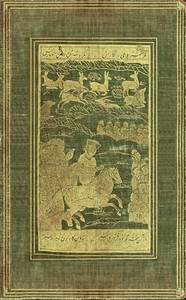
The Baz-nama-yi Nasiri : $b A Persian treatise on falconry
Written by Prince Taymur Mirza
Chaptra reads alongside you — AI insights, chapter breakdowns and reader discussions for every book. Join free
About this book
Reading guide
Themes, characters and key ideas in The Baz-nama-yi Nasiri : $b A Persian treatise on falconry, written by Chaptra AI.
- about 20 hours
- advanced
- informative
- instructive
- historical
Taymur Mirza's "The Bāz-nāma-yi Nāṣirī" is a seminal Persian treatise on falconry from the late 19th century, offering an exhaustive guide to the ancient sport. Penned by a prince with profound personal experience in hunting, the work systematically details various species of hunting birds, their intricate training methodologies, and their sophisticated management. Beyond a mere manual, it serves as a cultural legacy, preserving the rich traditions and specialized knowledge of falconry for future enthusiasts. The treatise is framed by the author's historical context, including his aristocratic lineage and personal journey, underscoring his dedication to both the art and its documentation.
“The true falconer possesses not merely skill, but a profound understanding of the bird's spirit, for mastery is born of respect, not subjugation.”
Key themes
- The Art and Science of Falconry
- This is the overarching theme, exploring falconry not just as a sport but as a complex discipline requiring deep scientific understanding of avian biology, meticulous training techniques, and an appreciation for the aesthetic and historical dimensions of the practice. The treatise is a direct manifestation of this theme.
- Preservation of Knowledge and Tradition
- Taymur Mirza explicitly positions his work as a legacy, an effort to document and pass on the intricate knowledge of falconry, which might otherwise be lost. This theme underscores the importance of historical texts in safeguarding cultural practices and specialized skills across generations.
- Human-Animal Relationship and Control
- The treatise delves into the complex relationship between the falconer and the bird of prey—one of control and partnership. It explores how wild instincts are harnessed and redirected through training, creating a unique bond based on mutual understanding, discipline, and shared purpose in the hunt.
Worth discussing
How does Taymur Mirza's personal history and aristocratic background influence the tone and content of the treatise?
Chapter-by-chapter breakdowns, character arcs and the full thematic analysis come with a free account.
Discussions
No one has started one yet
Questions this book opens up
No discussions yet
Be the first to start a discussion about this book!
Sign up to start the discussionReviews
No reviews yet
Be the first to review this book!