
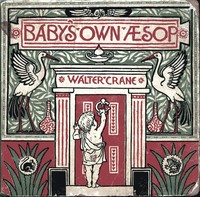
The Baby's Own Aesop
Written by Aesop,Walter Crane
Chaptra reads alongside you — AI insights, chapter breakdowns and reader discussions for every book. Join free
About this book
Reading guide
Themes, characters and key ideas in The Baby's Own Aesop, written by Chaptra AI.
- about 2 hours
- beginner
- uplifting
- educational
- charming
Walter Crane's "The Baby's Own Aesop" is a charming late 19th-century adaptation of Aesop's timeless fables, designed specifically for young readers. It presents classic moral tales, featuring a cast of anthropomorphic animal characters, in accessible rhymed verse. Each fable is succinctly accompanied by a clear moral, making it an effective introductory text for moral education through engaging storytelling. The book's appeal is significantly enhanced by Crane's vibrant and imaginative illustrations, which visually complement the narratives and draw children into the world of fables. Ultimately, it serves as an entertaining and educational tool, distilling ancient wisdom into simple principles for young minds.
“It is easy to despise what you cannot get.”
Key themes
- Moral Education and Didacticism
- This is the overarching purpose of "The Baby's Own Aesop." Each fable is explicitly designed to teach a specific ethical lesson, often stated directly as a moral at the end. The book aims to instill virtues and warn against vices in young readers.
- Consequences of Actions
- A central theme across many fables is the direct link between characters' choices and their outcomes. Good deeds are rewarded, and negative traits or foolish decisions lead to unfavorable results, emphasizing personal responsibility.
- Humility vs. Pride
- Many fables explore the contrast between humility and pride, almost invariably advocating for the former. Characters who exhibit arrogance or boastfulness often face downfall, while those who are humble and diligent are ultimately rewarded.
Worth discussing
How do the rhymed verses in 'The Baby's Own Aesop' make the fables more engaging for young readers compared to prose versions?
Chapter-by-chapter breakdowns, character arcs and the full thematic analysis come with a free account.
Discussions
No one has started one yet
Questions this book opens up
No discussions yet
Be the first to start a discussion about this book!
Sign up to start the discussionReviews
No reviews yet
Be the first to review this book!