
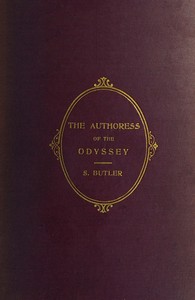
The Authoress of the Odyssey: Where and when she wrote, who she was, the use she made of the Iliad, and how the poem grew under her hands
Written by Samuel Butler
Chaptra reads alongside you — AI insights, chapter breakdowns and reader discussions for every book. Join free
About this book
Reading guide
Themes, characters and key ideas in The Authoress of the Odyssey: Where and when she wrote, who she was, the use she made of the Iliad, and how the poem grew under her hands, written by Chaptra AI.
- about 10 hours
- advanced
- Scholarly
- Argumentative
- Iconoclastic
Samuel Butler's "The Authoress of the Odyssey" is a provocative late 19th-century critical study that radically re-examines the authorship of Homer's epic. Butler posits that "The Odyssey" was penned by a young Sicilian woman, challenging the long-held tradition of Homeric authorship. His argument is built on meticulous textual analysis, geographical observations connecting the poem to Sicily, and an interpretation of the narrative's unique qualities through a feminine lens. The book not only delves into the internal evidence of the poem but also situates its thesis within broader scholarly debates surrounding classical literature and its creators, offering a compelling, albeit controversial, alternative perspective on one of Western civilization's foundational texts.
“I could not believe that the 'Odyssey' was written by the same person who wrote the 'Iliad'. The two poems were not merely different, they were opposed.”
Key themes
- Authorship and Attribution
- This is the central theme of the book. Butler challenges the traditional attribution of the *Odyssey* to Homer, arguing for a specific, alternative author. The theme explores the very nature of authorship, how it is determined (or assumed), and the implications of misattribution for understanding a text. It delves into the 'Homeric Question' and the methodologies used to dissect ancient literary origins.
- Gender and Perspective in Literature
- Butler's work is a pioneering, if controversial, exploration of how an author's gender might influence narrative choices, character development, and thematic focus. He argues that the *Odyssey*'s emphasis on domesticity, its sympathetic portrayal of female characters, and the nature of its hero (Odysseus) are best understood through a female authorial lens. This theme examines the interplay between authorial identity and literary expression.
- Textual Analysis and Interpretation
- The book is a masterclass in close reading and detailed textual analysis, even if its conclusions are disputed. Butler demonstrates how a meticulous examination of language, narrative inconsistencies, character motivations, and descriptive details can lead to profound, albeit speculative, insights into a text's origins and meaning. It highlights the subjective yet rigorous nature of literary interpretation.
Worth discussing
To what extent do Butler's arguments for female authorship rely on anachronistic gender stereotypes, and how might a modern feminist critique approach his thesis?
Chapter-by-chapter breakdowns, character arcs and the full thematic analysis come with a free account.
Discussions
No one has started one yet
Questions this book opens up
No discussions yet
Be the first to start a discussion about this book!
Sign up to start the discussionReviews
No reviews yet
Be the first to review this book!