
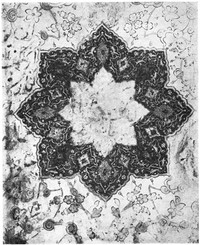
The Arts of Persia & Other Countries of Islam
Written by Hagop K. Kevorkian
Chaptra reads alongside you — AI insights, chapter breakdowns and reader discussions for every book. Join free
About this book
Reading guide
Themes, characters and key ideas in The Arts of Persia & Other Countries of Islam, written by Chaptra AI.
- about 30 hours
- advanced
- informative
- scholarly
- detailed
Hagop K. Kevorkian's 'The Arts of Persia & Other Countries of Islam' is a foundational scholarly work that comprehensively explores the rich artistic traditions spanning centuries across the Islamic world, with a particular emphasis on Persian art. The book meticulously catalogs and analyzes a vast array of art forms, including ceramics, textiles, metalwork, miniature painting, and architecture, providing a crucial historical and cultural context for each. It serves as an essential resource for understanding the aesthetic principles, technical innovations, and cross-cultural influences that shaped the visual culture of these regions. Through detailed descriptions and often extensive illustrations, Kevorkian illuminates the intricate beauty and profound significance of Islamic artistic heritage.
“The arts of Islam, far from being monolithic, represent a rich tapestry woven from diverse cultural threads, each contributing to a distinctive yet interconnected aesthetic.”
Key themes
- Cultural Exchange and Syncretism
- This theme explores how Islamic art, particularly Persian art, acted as a dynamic melting pot, absorbing and transforming influences from diverse cultures like Byzantium, Central Asia, India, and China. The book meticulously details how motifs, techniques, and stylistic elements traveled along trade routes and through conquests, resulting in a rich syncretic aesthetic that is distinctly Islamic yet globally informed.
- Mastery of Craft and Material Innovation
- Kevorkian's analysis consistently underscores the extraordinary technical skill and innovative spirit of Islamic artisans. The book details the development of sophisticated techniques in various mediums, from the invention of new ceramic glazes and firing methods to intricate metalworking processes like inlay and chasing, and the advanced weaving techniques employed in carpet making. This theme celebrates the ingenuity and dedication of craftsmen who pushed the boundaries of material possibilities.
- Art as an Expression of Piety and Power
- The book examines the dual role of art in the Islamic world: serving both as a means of expressing religious devotion and as a powerful tool for political legitimation and display of wealth. It explores how calligraphy, architectural grandeur, and the intricate decoration of religious objects were designed to reflect divine beauty and order, while simultaneously showcasing the prestige and authority of rulers and patrons.
Worth discussing
How does the book challenge or reinforce common perceptions of 'Islamic Art' as a unified or diverse tradition?
Chapter-by-chapter breakdowns, character arcs and the full thematic analysis come with a free account.
Discussions
No one has started one yet
Questions this book opens up
No discussions yet
Be the first to start a discussion about this book!
Sign up to start the discussionReviews
No reviews yet
Be the first to review this book!