
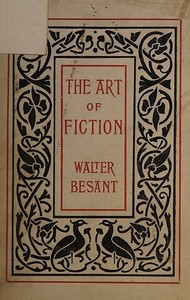
The art of fiction
Written by Walter Besant
Chaptra reads alongside you — AI insights, chapter breakdowns and reader discussions for every book. Join free
About this book
This work by Besant, Walter offers readers a unique literary experience. The narrative explores themes of fiction.
Read it with a club
Chaptra's fiction clubs — small groups reading the same books and talking as they go.


CraxMe Readers Book Club
Fiction
- 385 members
- 227 discussions
- Started December 2025
Welcome to the Readers Book Club. This is an informal group for like-minded people, where you can discuss books, share and recommend, track your reading progress, and lots more. Discuss Books — all about books. Discuss a particular book or genre, share your favourite quotes. Book Reviews — loved a book and highly recommend it? Or was it just average? Share your review and discuss with fellow readers. (May contain spoilers.) Group Reads — what is a book club without a group read! Buddy Reads — planning to read a book and looking for someone to read it with? Post in the Buddy Read request thread, find a reading buddy, and start discussing.
Read The art of fiction alongside people who are reading it too.
Also here: Doorstops, First Lines Club
Chaptra Prime — paid clubs, every club feature, and unlimited reading support, for $5 a month or $60 once.
See PrimeReading guide
Themes, characters and key ideas in The art of fiction, written by Chaptra AI.
- about 2 hours
- intermediate
- instructive
- didactic
- persuasive
Walter Besant's "The Art of Fiction" is a seminal essay advocating for the recognition of novel writing as a legitimate and serious art form, deserving of the same respect and critical attention as painting or music. Published in 1884, it lays out prescriptive principles for aspiring novelists, emphasizing the importance of realism, keen observation, moral purpose, and diligent craftsmanship. Besant challenges the prevailing notion that fiction is a trivial pursuit, arguing instead for its profound capacity to reflect and influence society. His work sparked a significant literary debate, most notably eliciting a famous response from Henry James, and remains a foundational text in the history of literary criticism regarding the novel.
“The Art of Fiction, in England at least, is still very far from being recognised as it should be.”
Key themes
- The Novel as a Legitimate Art Form
- Besant's central argument is a passionate plea for the novel to be recognized as a serious art, deserving of the same critical respect and scholarly attention as painting, music, or poetry. He challenges the prevailing Victorian perception of fiction as mere entertainment, asserting its profound capacity for intellectual and moral engagement.
- Realism and Observation
- Besant strongly advocates for realism in fiction, urging novelists to base their work on meticulous observation of life, human nature, and society. He believes that 'truth' in fiction comes from accurately depicting what the writer knows or has carefully studied, rather than relying on pure invention or sensationalism.
- Craft and Diligence in Writing
- Besant champions the idea that writing fiction is a craft requiring immense skill, diligence, and dedication, rather than mere inspiration or 'genius.' He emphasizes the importance of careful planning, robust plot construction, detailed character development, and refined prose style, advocating for a methodical approach to novel creation.
Worth discussing
How does Besant define 'art' in the context of fiction, and how does this compare to modern definitions?
Chapter-by-chapter breakdowns, character arcs and the full thematic analysis come with a free account.
Discussions
No one has started one yet
Questions this book opens up
No discussions yet
Be the first to start a discussion about this book!
Sign up to start the discussionReviews
No reviews yet
Be the first to review this book!