
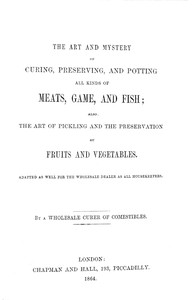
The art and mystery of curing, preserving, and potting all kinds of meats, game, and fish; also, the art of pickling and the preservation of fruits and vegetables
Written by Anonymous
Chaptra reads alongside you — AI insights, chapter breakdowns and reader discussions for every book. Join free
About this book
Reading guide
Themes, characters and key ideas in The art and mystery of curing, preserving, and potting all kinds of meats, game, and fish; also, the art of pickling and the preservation of fruits and vegetables, written by Chaptra AI.
- about 10 hours
- intermediate
- instructional
- practical
- historical
This anonymous 18th or 19th-century manual serves as a comprehensive guide to historical food preservation techniques, covering a vast array of meats, game, fish, fruits, and vegetables. It meticulously details methods such as curing, salting, smoking, potting, pickling, and sugaring, reflecting the essential domestic skills required before refrigeration. Beyond mere recipes, the book provides a systematic approach to ensuring food security and variety throughout the year, making it an invaluable resource for household management. It stands as a testament to the ingenuity and resourcefulness of past generations in maximizing their food resources.
“To ensure the perfect cure, observe well the precise measure of salt and spice, for in these lies the very essence of preservation.”
Key themes
- Self-Sufficiency and Domestic Economy
- This theme is central, emphasizing the ability of a household to manage and extend its food resources independently. The book provides the practical knowledge necessary for families to process and store their own meats, game, fish, fruits, and vegetables, reducing reliance on external markets and ensuring food security throughout the year. It reflects a time when such skills were fundamental to household survival and prosperity, allowing for a varied diet even in times of scarcity.
- The Preservation of Knowledge and Craft
- The book itself embodies the theme of codifying and transmitting invaluable practical knowledge. It takes what were likely orally transmitted traditions or skills passed down through apprenticeship and renders them into a written, accessible format. This act of documentation ensures that complex, multi-step processes for curing, preserving, and potting are not lost, but systematically recorded for wider dissemination. It highlights the value placed on practical expertise and the desire to make 'art and mystery' understandable.
- Resourcefulness and Ingenuity
- This theme pervades the entire manual, showcasing the ingenious methods developed to overcome the limitations of perishable food and the lack of modern refrigeration. Every technique described—from the use of salt and smoke to sugar and vinegar—represents a clever solution to a fundamental problem. The book encourages readers to make the most of what is available, transforming raw ingredients into durable, palatable provisions, thereby minimizing waste and maximizing utility.
Worth discussing
How do the preservation methods described in the book compare to modern techniques, and what are the primary differences in underlying scientific understanding?
Chapter-by-chapter breakdowns, character arcs and the full thematic analysis come with a free account.
Discussions
No one has started one yet
Questions this book opens up
No discussions yet
Be the first to start a discussion about this book!
Sign up to start the discussionReviews
No reviews yet
Be the first to review this book!