
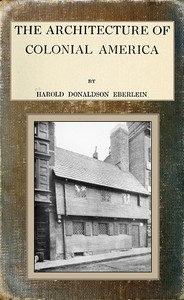
The Architecture of Colonial America
Written by Harold Donaldson Eberlein
Chaptra reads alongside you — AI insights, chapter breakdowns and reader discussions for every book. Join free
About this book
Reading guide
Themes, characters and key ideas in The Architecture of Colonial America, written by Chaptra AI.
- about 8 hours
- advanced
- Informative
- Historical
- Academic
Harold Donaldson Eberlein's "The Architecture of Colonial America" is an early 20th-century historical treatise that meticulously documents the evolution of colonial American architecture from the 17th to the 18th centuries. The book posits that architectural forms are indelible records of historical periods, reflecting the social, economic, and cultural dynamics of their inhabitants. It explores how various European building traditions, particularly English, Dutch, and regional adaptations, coalesced under the unique environmental and societal pressures of the New World. Eberlein's work emphasizes the interplay between settlers' inherited craftsmanship and the practicalities of their new environment, shaping a distinct American architectural identity. Through detailed analysis of different styles and their regional manifestations, the volume provides a foundational understanding of America's early built heritage.
“"Structures serve as lasting records of the lives and social dynamics of their occupants."”
Key themes
- Architecture as Historical Record
- This is the central thesis of Eberlein's work: that buildings are not just shelters but tangible documents reflecting the social, economic, and cultural conditions of their time. The book meticulously demonstrates how architectural choices—from materials and layout to ornamentation—provide direct insights into the daily lives, values, craftsmanship, and aspirations of colonial settlers. It argues that to understand history fully, one must 'read' the built environment.
- Adaptation and Synthesis of Styles
- Eberlein extensively explores how various European architectural traditions (primarily English, but also Dutch, French, and others) were transported to the American colonies and subsequently transformed. This theme highlights the dynamic process of cultural adaptation, where inherited styles met new environmental conditions, available materials, and the practical needs of a developing society. The result was not mere imitation but a unique synthesis, forming distinct regional colonial styles.
- Social and Economic Determinants of Form
- The book consistently connects architectural choices to the economic prosperity and social structure of colonial communities. It analyzes how the availability of wealth, the social standing of the occupants, and the prevalent economic activities (e.g., farming, trade, plantation agriculture) directly influenced the scale, complexity, and ornamentation of buildings. From the modest dwellings of early settlers to the grand estates of wealthy planters, architecture served as a visible indicator of social hierarchy and economic success.
Worth discussing
How does Eberlein's foundational premise—that architecture is a 'lasting record' of history—influence our understanding of colonial America?
Chapter-by-chapter breakdowns, character arcs and the full thematic analysis come with a free account.
Discussions
No one has started one yet
Questions this book opens up
No discussions yet
Be the first to start a discussion about this book!
Sign up to start the discussionReviews
No reviews yet
Be the first to review this book!