
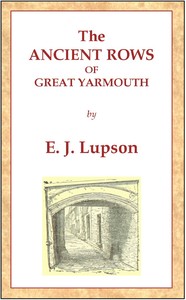
The Ancient Rows of Great Yarmouth: Their names, why so constructed, and what visitors have written about them, also a descriptive sketch of Yarmouth Beach
Written by Edward John Lupson
Chaptra reads alongside you — AI insights, chapter breakdowns and reader discussions for every book. Join free
About this book
Reading guide
Themes, characters and key ideas in The Ancient Rows of Great Yarmouth: Their names, why so constructed, and what visitors have written about them, also a descriptive sketch of Yarmouth Beach, written by Chaptra AI.
- about 8 hours
- intermediate
- informative
- historical
- descriptive
Edward John Lupson's 'The Ancient Rows of Great Yarmouth' offers a meticulous historical and descriptive account of Great Yarmouth's unique architectural feature, the 'Rows.' The book delves into their origins, construction, naming conventions, and the daily life they once supported, enriched by observations from historical visitors. Beyond the narrow streets, Lupson provides a vivid 'descriptive sketch' of Yarmouth Beach, contrasting the bustling town with the natural seascape. It serves as a vital historical record, preserving the memory and significance of these distinctive urban pathways and the broader coastal environment.
“The Rows, a labyrinthine network of narrow arteries, are the very veins through which the ancient lifeblood of Great Yarmouth once pulsed.”
Key themes
- Local Identity and Heritage
- This theme explores how the unique architectural design and historical evolution of the Rows fundamentally shaped Great Yarmouth's character and provided a distinctive identity for its inhabitants. Lupson emphasizes how these narrow passages were not just physical structures but integral to the town's economic activities (especially fishing) and social fabric, making them a cornerstone of local heritage.
- Urban Evolution and Adaptation
- The book meticulously details the practical reasons behind the Rows' construction—often as rights of way between properties, necessitated by the town's specific layout and burgeoning population. It explores how these structures adapted over centuries to serve various functions, from defensive passages to bustling commercial routes, reflecting the dynamic nature of urban planning and human ingenuity in confined spaces.
- Historical Preservation and Documentation
- Lupson's entire project is an act of historical preservation. The book serves as a detailed record of the Rows, many of which were already in decline or had been demolished by the time of writing. It underscores the importance of documenting unique architectural and social histories before they are lost to time, development, or neglect, ensuring that future generations can understand their legacy.
Worth discussing
How do unique architectural features like the Rows contribute to a town's distinct identity and sense of place?
Chapter-by-chapter breakdowns, character arcs and the full thematic analysis come with a free account.
Discussions
No one has started one yet
Questions this book opens up
No discussions yet
Be the first to start a discussion about this book!
Sign up to start the discussionReviews
No reviews yet
Be the first to review this book!