
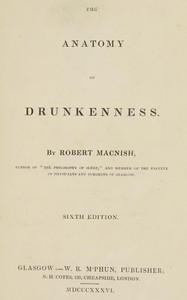
The anatomy of drunkenness
Written by Robert Macnish
Chaptra reads alongside you — AI insights, chapter breakdowns and reader discussions for every book. Join free
About this book
Reading guide
Themes, characters and key ideas in The anatomy of drunkenness, written by Chaptra AI.
- about 8 hours
- advanced
- informative
- analytical
- didactic
Robert Macnish's "The Anatomy of Drunkenness" is an early 19th-century scientific treatise that meticulously explores the phenomenon of intoxication. It delves into the historical prevalence of drunkenness, tracing its roots from antiquity through various cultures and climates, arguing for its enduring nature rather than it being a modern vice. The work systematically examines the multifaceted causes and effects of alcohol on both the physical body and the psychological state. Macnish also analyzes how individual temperaments influence responses to alcohol and investigates the varying impacts of different intoxicating substances. Ultimately, it serves as a comprehensive, albeit historically contextualized, study of drunkenness and its societal implications.
“Drunkenness, in all ages and countries, has been a prevalent vice, and one productive of the most demoralizing and lamentable effects upon mankind.”
Key themes
- Physiological and Psychological Effects of Alcohol
- A core focus of the book is the detailed examination of how alcohol impacts the human body and mind. Macnish systematically describes the physical symptoms of intoxication, from initial euphoria to severe impairment, and explores the psychological changes, including alterations in mood, perception, and cognitive function. He distinguishes between immediate and long-term effects, attempting to categorize the diverse manifestations of drunkenness.
- The Historical and Cultural Ubiquity of Drunkenness
- Macnish extensively argues that drunkenness is not a modern phenomenon but an enduring human behavior found across all historical periods and diverse cultures. He provides examples from antiquity and various societies to illustrate its persistent presence, suggesting it is deeply ingrained in human history and social fabric, adapting and varying with time and climate.
- The Role of Temperament and Individual Differences
- Macnish observes that not all individuals react to alcohol in the same way. He posits that different 'temperaments' or constitutional predispositions influence one's response to intoxication, leading to varied physical and psychological manifestations. This early recognition of individual variability suggests an understanding that goes beyond a simplistic dose-response model, hinting at the complex interplay of biology and personality.
Worth discussing
How does Macnish's early 19th-century scientific approach to drunkenness compare with modern understandings of addiction?
Chapter-by-chapter breakdowns, character arcs and the full thematic analysis come with a free account.
Discussions
No one has started one yet
Questions this book opens up
No discussions yet
Be the first to start a discussion about this book!
Sign up to start the discussionReviews
No reviews yet
Be the first to review this book!