
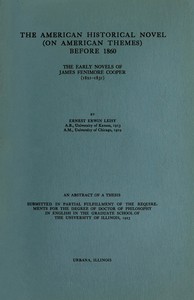
The American historical novel (on American themes) before 1860 : $b the early novels of James Fenimore Cooper (1821-1831)
Written by Ernest Erwin Leisy
Chaptra reads alongside you — AI insights, chapter breakdowns and reader discussions for every book. Join free
About this book
Reading guide
Themes, characters and key ideas in The American historical novel (on American themes) before 1860 : $b the early novels of James Fenimore Cooper (1821-1831), written by Chaptra AI.
- about 12 hours
- advanced
- analytical
- scholarly
- informative
Ernest Erwin Leisy's "The American Historical Novel (on American themes) before 1860" serves as a foundational scholarly examination of James Fenimore Cooper's early contributions to American literature. Published in the early 20th century, this work meticulously analyzes Cooper's novels from 1821-1831, highlighting his pivotal role in defining the historical novel genre in America. Leisy explores how Cooper's narratives, such as "The Spy" and "The Leatherstocking Tales," engaged with crucial American historical events and themes, including the Revolutionary War, pioneer life, and the complex relationship between settlers and Native Americans. The book argues that Cooper's innovative storytelling, character development, and exploration of the American frontier provided an enduring framework for subsequent American historical fiction, establishing a distinct national literary voice.
“"Cooper's early novels laid the indispensable groundwork for the distinctively American historical narrative."”
Key themes
- The Formation of American National Identity
- Leisy extensively examines how Cooper's early novels, particularly those set during the Revolutionary War or on the frontier, actively contributed to the construction of a distinct American national identity. He analyzes how Cooper's heroes, settings, and conflicts helped define what it meant to be American, fostering a collective historical consciousness and sense of national purpose.
- The American Frontier and Wilderness
- Leisy highlights Cooper's pioneering role in depicting the American wilderness and frontier life. He analyzes how Cooper explored the unique challenges, moral dilemmas, and romanticized aspects of westward expansion, establishing the wilderness as a quintessential American setting and a source of both peril and profound spiritual experience.
- The Historical Novel as a Genre
- Leisy dissects Cooper's contribution to the formal development of the historical novel. He examines Cooper's narrative techniques, characterization, and use of historical events to craft compelling fiction, illustrating how Cooper adapted and innovated upon European models to create a uniquely American form of historical storytelling.
Worth discussing
How does Leisy's analysis of Cooper contribute to our understanding of American national identity in the early 19th century?
Chapter-by-chapter breakdowns, character arcs and the full thematic analysis come with a free account.
Discussions
No one has started one yet
Questions this book opens up
No discussions yet
Be the first to start a discussion about this book!
Sign up to start the discussionReviews
No reviews yet
Be the first to review this book!