
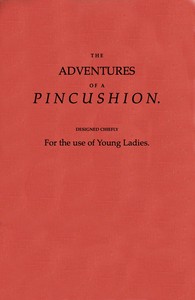
The Adventures of a Pincushion, Designed Chiefly for the Use of Young Ladies
Written by Mary Ann Kilner
Chaptra reads alongside you — AI insights, chapter breakdowns and reader discussions for every book. Join free
About this book
Reading guide
Themes, characters and key ideas in The Adventures of a Pincushion, Designed Chiefly for the Use of Young Ladies, written by Chaptra AI.
- about 3 hours
- intermediate
- didactic
- observational
- whimsical
Mary Ann Kilner's "The Adventures of a Pincushion" is a delightful 18th-century children's narrative that follows the first-person journey of a sentient pincushion through various domestic settings. Crafted primarily for young ladies, the book ingeniously blends entertainment with moral instruction, as the pincushion observes and comments on the behaviors of its owners. From its creation by Martha to its subsequent travels, the story offers a whimsical yet insightful exploration of childhood virtues, household responsibilities, and proper conduct. It serves as a charming historical artifact, reflecting the didactic approach to education prevalent in its era while providing a unique perspective on the everyday lives of children.
“"It is not the grandest station, but the most useful life, that truly earns respect."”
Key themes
- Moral Education and Didacticism
- The primary theme of the book, which aims to instruct young girls in proper behavior, virtues, and societal expectations. Every episode and observation made by the pincushion serves to highlight a moral lesson, often contrasting good conduct with its negative consequences. This reflects the prevailing educational philosophy of the late 18th century.
- Domesticity and Female Roles
- The book is explicitly "Designed Chiefly for the Use of Young Ladies" and heavily emphasizes the importance of domestic skills, tidiness, and proper conduct within the home. It reinforces the societal expectations for women to be competent in household management and to cultivate virtues suitable for their roles as future wives and mothers.
- Childhood Responsibility and Behavior
- A core focus of the book is the cultivation of responsible behavior in children. Through the pincushion's journey, readers are exposed to various examples of good and bad conduct, emphasizing the importance of tidiness, care for belongings, obedience to parents, and industriousness. The book serves as a guide for young readers on how to be 'good' children.
Worth discussing
How does giving a voice to an inanimate object like a pincushion influence the reader's perspective on the characters and their actions?
Chapter-by-chapter breakdowns, character arcs and the full thematic analysis come with a free account.
Discussions
No one has started one yet
Questions this book opens up
No discussions yet
Be the first to start a discussion about this book!
Sign up to start the discussionReviews
No reviews yet
Be the first to review this book!