
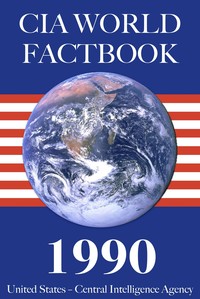
The 1990 CIA World Factbook
Written by United States. Central Intelligence Agency
Chaptra reads alongside you — AI insights, chapter breakdowns and reader discussions for every book. Join free
About this book
Read it with a club
Chaptra's ideas and essays clubs — small groups reading the same books and talking as they go.


Books That Changed My Mind
Ideas and essays
- 5 members
- 4 discussions
- Active Sep 11
Not books you enjoyed. Books that moved you off a position you'd genuinely held for years. This is a Chaptra house club — set up and moderated by us to get the conversation going. Open to everyone; jump in anywhere.
Read The 1990 CIA World Factbook alongside people who are reading it too.
Chaptra Prime — paid clubs, every club feature, and unlimited reading support, for $5 a month or $60 once.
See PrimeReading guide
Themes, characters and key ideas in The 1990 CIA World Factbook, written by Chaptra AI.
- about 40 hours
- intermediate
- informative
- factual
- objective
The 1990 CIA World Factbook serves as a critical governmental reference tool, meticulously compiling detailed statistics and descriptive data for 249 global entities in the late 20th century. Designed primarily for U.S. government officials, it offers a comprehensive snapshot of each nation's geography, demographics, economic indicators, and political structures. The publication's introductory sections delineate its organizational methodology and purpose, providing context for understanding the granular data presented for countries like Afghanistan and Algeria. This extensive compilation functions as an indispensable resource for informed policy-making, international relations analysis, and comparative geopolitical studies, reflecting the global landscape at a pivotal historical moment.
“This publication is prepared for the use of U.S. Government officials, and the style, format, coverage, and content are designed to meet their specific requirements.”
Key themes
- The Pursuit of Knowledge and Information Control
- The fundamental purpose of the Factbook is to aggregate and present vast amounts of data, highlighting the intelligence community's continuous effort to understand and categorize the world. This theme explores how information is collected, organized, and disseminated for strategic advantage and policy-making.
- Geopolitical Landscape and National Identity
- The Factbook meticulously details the political, economic, and social characteristics of 249 entities, thereby constructing a snapshot of global geopolitics and implicitly defining national identities through factual data. It highlights how nations are categorized and understood in relation to others.
- Economic Interdependence and Disparity
- Through its detailed economic indicators, the Factbook illustrates the vast disparities in global wealth, development, and resource distribution, while also implicitly showing how nations are interconnected through trade, aid, and shared markets. It highlights the economic realities that drive international relations.
Worth discussing
How does the structure and purpose of The 1990 CIA World Factbook reflect the geopolitical priorities of the United States during the late Cold War/early post-Cold War era?
Chapter-by-chapter breakdowns, character arcs and the full thematic analysis come with a free account.
Discussions
No one has started one yet
Questions this book opens up
No discussions yet
Be the first to start a discussion about this book!
Sign up to start the discussionReviews
No reviews yet
Be the first to review this book!