
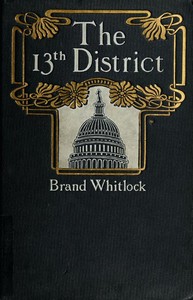
The 13th District: A Story of a Candidate
Written by Brand Whitlock
Chaptra reads alongside you — AI insights, chapter breakdowns and reader discussions for every book. Join free
About this book
Reading guide
Themes, characters and key ideas in The 13th District: A Story of a Candidate, written by Chaptra AI.
- about 9 hours
- intermediate
- introspective
- serious
- realistic
Brand Whitlock's "The 13th District: A Story of a Candidate" delves into the tumultuous world of early 20th-century American politics through the eyes of Jerry Garwood, an idealistic congressional candidate. The novel meticulously charts Garwood's journey from an enthusiastic nomination to the harsh realities of campaigning, exploring the intricate dance between personal ambition and public expectation. As Garwood grapples with the ethical compromises and public scrutiny inherent in politics, his personal relationships, particularly with Emily Harkness, are tested. Ultimately, the story serves as a poignant examination of idealism's struggle against pragmatism and corruption within the democratic process, questioning the true cost of political success.
“"Popularity is a strange master, Jerry. It gives you a crown one day and a cross the next."”
Key themes
- Idealism vs. Pragmatism
- This central theme explores the struggle between maintaining one's moral principles and making necessary compromises to achieve political goals. Garwood's journey is a continuous test of whether his initial idealism can survive the practical demands and ethical ambiguities of a congressional campaign.
- Public Perception and Private Integrity
- The novel meticulously dissects the disconnect between a candidate's carefully constructed public image and their complex private reality. It examines how public figures are judged and how their personal lives and moral choices are scrutinized and often distorted by the media and political opponents.
- The Corrupting Influence of Power
- Whitlock explores how the pursuit and exercise of political power can corrupt individuals and institutions. This theme manifests through the actions of the political machine, the ethical dilemmas Garwood faces, and the subtle ways idealism can be eroded by the demands of winning and governing.
Worth discussing
How does Jerry Garwood's initial idealism evolve throughout the campaign? Is his transformation a sign of growth or compromise?
Chapter-by-chapter breakdowns, character arcs and the full thematic analysis come with a free account.
Discussions
No one has started one yet
Questions this book opens up
No discussions yet
Be the first to start a discussion about this book!
Sign up to start the discussionReviews
No reviews yet
Be the first to review this book!