
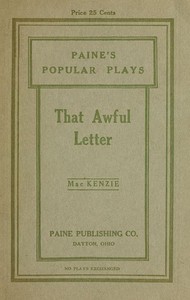
That Awful Letter: A Comedy for Girls
Written by Edna I. MacKenzie
Chaptra reads alongside you — AI insights, chapter breakdowns and reader discussions for every book. Join free
About this book
Reading guide
Themes, characters and key ideas in That Awful Letter: A Comedy for Girls, written by Chaptra AI.
- about 8 hours
- beginner
- humorous
- lighthearted
- witty
Edna I. MacKenzie's 'That Awful Letter: A Comedy for Girls' is a lighthearted one-act play likely intended for amateur theatricals and school performances in the early 20th century. It centers around a misunderstanding caused by a poorly worded or misinterpreted letter, which throws a group of young girls into a state of comedic chaos. The play typically explores themes of social etiquette, the perils of miscommunication, and the importance of clear expression and honesty among friends. Through its humorous situations and relatable characters, it aims to entertain while subtly imparting lessons on social graces and resolving minor conflicts.
“Specific quotes are unavailable without access to the full text of the play. However, typical dialogue would include exclamations of shock, dramatic whispers, and humorous misinterpretations of the letter's contents, such as: 'Oh, the absolute horror of it!', 'You can't mean she actually wrote *that*!', 'But what could she possibly have meant by 'the dreadful secret'?', 'It's all a dreadful misunderstanding, I assure you!'”
Key themes
- Miscommunication and Clarity
- This is the central theme, explored through the 'awful letter' itself. The play highlights how easily words, especially written ones, can be misinterpreted without context or clear intent, leading to humorous and sometimes embarrassing social predicaments. It emphasizes the importance of precise language and direct communication to avoid misunderstandings.
- Social Etiquette and Reputation
- The play subtly explores the pressures young girls face in maintaining a good reputation and adhering to social norms. The 'awful letter' likely threatens a character's standing or causes a breach of etiquette, prompting comedic efforts to save face or restore social harmony. It teaches lessons about appropriate behavior and the consequences of social faux pas.
- Friendship and Forgiveness
- Underlying the comedic chaos is the theme of friendship. The play demonstrates how misunderstandings can strain even strong bonds, but ultimately, genuine friendship is resilient enough to overcome such hurdles. The resolution typically involves forgiveness and the reaffirmation of loyalty among the girls.
Worth discussing
How does the play use misunderstanding to create humor? Can you recall a time when a misunderstanding led to a funny or awkward situation in your own life?
Chapter-by-chapter breakdowns, character arcs and the full thematic analysis come with a free account.
Discussions
No one has started one yet
Questions this book opens up
No discussions yet
Be the first to start a discussion about this book!
Sign up to start the discussionReviews
No reviews yet
Be the first to review this book!