
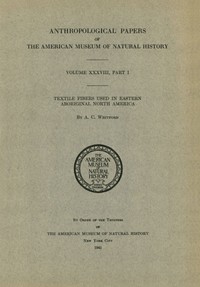
Textile Fibers used in Eastern Aboriginal North America
Written by A. C. Whitford
Chaptra reads alongside you — AI insights, chapter breakdowns and reader discussions for every book. Join free
About this book
Reading guide
Themes, characters and key ideas in Textile Fibers used in Eastern Aboriginal North America, written by Chaptra AI.
- about 12 hours
- advanced
- informative
- scholarly
- analytical
A. C. Whitford's "Textile Fibers used in Eastern Aboriginal North America" is a foundational ethnoarchaeological study meticulously cataloging and analyzing the natural fibers employed by Indigenous peoples across the eastern regions of North America for textile production. The book systematically identifies various plant and animal sources, detailing their procurement, preparation techniques, and the cultural contexts of their use. It serves as a comprehensive reference for researchers in anthropology, archaeology, and material culture, shedding light on the sophisticated technological knowledge and resourcefulness of Native American societies. Whitford's work reconstructs ancient textile practices, offering invaluable insights into daily life, craft traditions, and environmental adaptation.
“The identification of specific fiber types provides crucial evidence for the technological sophistication and environmental adaptation of Eastern Aboriginal communities.”
Key themes
- Material Culture and Technology
- This theme explores the tangible objects created, used, and valued by Indigenous societies, specifically focusing on the textile fibers and the sophisticated technologies employed to transform raw materials into functional and artistic items. The book meticulously documents the tools, techniques, and processes involved in fiber procurement, preparation, and fabrication, highlighting the ingenuity and practical knowledge embedded in these practices.
- Ethnobotany and Ecological Knowledge
- This theme delves into the profound understanding Indigenous peoples possessed regarding their local flora, specifically identifying which plants yielded suitable fibers and how to sustainably harvest and process them. It showcases the intricate relationship between human societies and their natural environment, emphasizing traditional ecological knowledge (TEK) as a basis for survival and cultural development.
- Preservation and Interpretation of Indigenous Heritage
- This theme underscores the book's role in documenting and preserving the often-overlooked technological and artistic heritage of Eastern Aboriginal North America. By meticulously identifying and describing fiber use, Whitford contributes to a more complete and accurate historical record, countering narratives that might have marginalized Indigenous contributions to human innovation.
Worth discussing
How does Whitford's work challenge or confirm existing perceptions of Indigenous technological capabilities in Eastern North America?
Chapter-by-chapter breakdowns, character arcs and the full thematic analysis come with a free account.
Discussions
No one has started one yet
Questions this book opens up
No discussions yet
Be the first to start a discussion about this book!
Sign up to start the discussionReviews
No reviews yet
Be the first to review this book!