
About this book
Reading guide
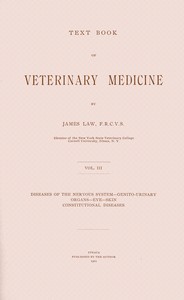
Themes, characters and key ideas in Text book of veterinary medicine, Volume 3 (of 5), written by Chaptra AI.
- about 20 hours
- advanced
- informative
- academic
- didactic
James Law's "Text book of veterinary medicine, Volume 3 (of 5)" serves as a foundational and comprehensive treatise on the diseases affecting domestic animals, specifically focusing on a particular range of pathologies within the broader scope of veterinary science. This volume, part of a multi-volume series, systematically details the etiology, symptoms, diagnosis, prognosis, and treatment of various animal ailments prevalent during its publication era. It reflects the state of veterinary knowledge and practice at the time, aiming to equip practitioners and students with a robust understanding of animal health and disease management. The work is characterized by its meticulous organization, empirical observations, and practical guidance for the veterinary professional.
“The accurate diagnosis forms the indispensable basis of all rational therapeutics.”
Key themes
- Disease Etiology and Pathogenesis
- This theme explores the causes (etiology) and mechanisms of disease development (pathogenesis) in various domestic animals. The book details the then-current understanding of infectious agents, environmental factors, genetic predispositions, and physiological dysfunctions leading to illness. It emphasizes careful observation and classification to understand how diseases arise and progress.
- Diagnostic Methodology
- The book heavily emphasizes the systematic approach to diagnosing animal diseases, relying primarily on clinical signs, physical examination, and post-mortem findings. It outlines the process of history taking, symptom analysis, and differential diagnosis, reflecting the diagnostic tools and knowledge available at the time, which predated many modern imaging and laboratory techniques.
- Therapeutic Interventions and Management
- This theme covers the recommended treatments and management strategies for various animal diseases. It includes discussions on pharmacological agents (often botanical or mineral-based), surgical procedures, husbandry practices, and public health measures aimed at controlling disease spread. The therapeutic approaches reflect the pharmacological and surgical capabilities of the era.
Worth discussing
How have diagnostic methods for animal diseases evolved since the publication of this text?
Chapter-by-chapter breakdowns, character arcs and the full thematic analysis come with a free account.
Discussions
No one has started one yet
Questions this book opens up
No discussions yet
Be the first to start a discussion about this book!
Sign up to start the discussionReviews
No reviews yet
Be the first to review this book!