
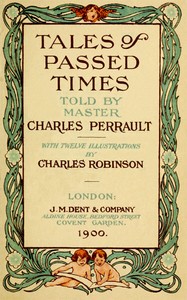
Tales of Passed Times
Written by Charles Perrault
Chaptra reads alongside you — AI insights, chapter breakdowns and reader discussions for every book. Join free
About this book
Reading guide
Themes, characters and key ideas in Tales of Passed Times, written by Chaptra AI.
- about 8 hours
- intermediate
- enchanting
- didactic
- classic
Charles Perrault's "Tales of Passed Times" is a seminal collection of classic fairy tales, first published in the late 17th century, that laid much of the groundwork for Western children's literature. Featuring iconic narratives like "The Sleeping Beauty," "Little Red Riding-Hood," and "Cinderella," the book compiles traditional folklore with Perrault's distinct moralistic and refined literary touch. Each story, often concluding with a clear moral, explores universal themes of virtue, vice, transformation, and the triumph of good over evil. The collection not only entertains with its fantastical elements and memorable characters but also serves as a cultural touchstone, influencing countless adaptations and shaping our understanding of these timeless narratives for generations.
“"Children, especially pretty, well-bred young ladies, should never talk to strangers, for if they do, they may well provide dinner for a wolf."”
Key themes
- Virtue Rewarded and Vice Punished
- This is the overarching theme in nearly all of Perrault's tales. Characters who exhibit kindness, patience, obedience, and humility (e.g., Cinderella, Sleeping Beauty) are ultimately favored by fortune or magic and achieve happiness. Conversely, those who are cruel, disobedient, proud, or envious (e.g., Cinderella's stepfamily, the Wicked Fairy, the Wolf) meet with fittingly negative consequences, often death or eternal suffering.
- Transformation and Metamorphosis
- Many tales feature significant transformations, both literal and metaphorical. Characters undergo changes in status, appearance, or state of being, often facilitated by magic or their own actions. These transformations can signify growth, revelation, or the consequence of deeds.
- Consequences of Disobedience and Naivety
- Particularly evident in tales like "Little Red Riding-Hood," this theme emphasizes the dangers of straying from prescribed paths, ignoring warnings, or trusting strangers. It serves as a strong cautionary message, especially for younger audiences, about prudence and adherence to social rules.
Worth discussing
How do Perrault's appended morals influence the interpretation of each tale, and are they still relevant today?
Chapter-by-chapter breakdowns, character arcs and the full thematic analysis come with a free account.
Discussions
No one has started one yet
Questions this book opens up
No discussions yet
Be the first to start a discussion about this book!
Sign up to start the discussionReviews
No reviews yet
Be the first to review this book!