
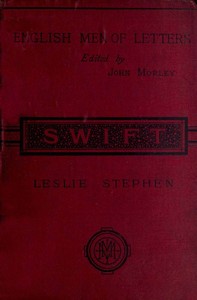
Swift
Written by Leslie Stephen
Chaptra reads alongside you — AI insights, chapter breakdowns and reader discussions for every book. Join free
About this book
Reading guide
Themes, characters and key ideas in Swift, written by Chaptra AI.
- about 12 hours
- advanced
- analytical
- historical
- biographical
Leslie Stephen's "Swift" offers a late 19th-century biographical exploration of Jonathan Swift, tracing the complex development of the renowned satirist from his challenging early years. The book meticulously details Swift's lineage, peculiar birth, and childhood marked by neglect and struggles with identity, setting the stage for his later intellectual prowess. It delves into his formative experiences, particularly his education at Trinity College Dublin and the resentment he harbored towards his relatives. Stephen's work not only illuminates Swift's personal history but also situates it within the broader social and political landscape of 17th and 18th-century Ireland, revealing how these early influences shaped his character and fueled his distinctive literary voice.
“As this is a biographical analysis based on a summary, specific memorable quotes from Leslie Stephen's original text are not available.”
Key themes
- The Influence of Formative Experiences
- Central to the biography, this theme emphasizes how Swift's early life, including his neglect, education at Trinity College Dublin, and resentment towards relatives, directly shaped his complex character, intellect, and eventual satirical prowess. Stephen argues these experiences were not incidental but fundamental to his later literary and political engagements.
- Identity and Belonging
- This theme explores Swift's early struggles with his sense of self and his place within his family and society. His peculiar birth and perceived neglect foster a feeling of not truly belonging, which profoundly impacts his psychological development and fuels his later critical perspective.
- The Genesis of Satirical Prowess
- This theme traces how Swift's early struggles, including his resentment and intellectual development, served as the fertile ground for his later mastery of satire. The biography suggests that his personal grievances and keen observation of human folly, honed during his formative years, were fundamental in shaping his unique critical and often caustic literary voice.
Worth discussing
How does Leslie Stephen's portrayal of Swift's early life contribute to our understanding of his later satirical works?
Chapter-by-chapter breakdowns, character arcs and the full thematic analysis come with a free account.
Discussions
No one has started one yet
Questions this book opens up
No discussions yet
Be the first to start a discussion about this book!
Sign up to start the discussionReviews
No reviews yet
Be the first to review this book!