
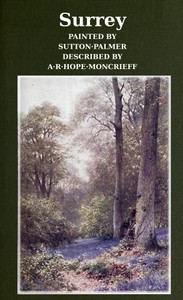
Surrey: Painted by Sutton Palmer; Described by A.R. Hope Moncrieff
Written by A. R. Hope (Ascott Robert Hope) Moncrieff
Chaptra reads alongside you — AI insights, chapter breakdowns and reader discussions for every book. Join free
About this book
Reading guide
Themes, characters and key ideas in Surrey: Painted by Sutton Palmer; Described by A.R. Hope Moncrieff, written by Chaptra AI.
- about 8 hours
- intermediate
- picturesque
- nostalgic
- contemplative
A. R. Hope Moncrieff's "Surrey," part of Black's Popular Series of Colour Books, offers a vibrant descriptive account of Surrey, England, in the early 20th century, beautifully complemented by Sutton Palmer's artwork. The book serves as an appreciative exploration of the county's diverse landscapes, from the meandering Thames to the inviting Weald and picturesque villages, highlighting its unique blend of rural charm and historical depth. Moncrieff eloquently captures Surrey's essence as a 'home county,' celebrating its natural beauty while also expressing a poignant concern for the encroaching urban development from London. Ultimately, it is both a loving tribute to a cherished region and a subtle plea for the preservation of its enduring character against modern transformation.
“Surrey, that home county, offers a mosaic of English beauty, where the Thames whispers ancient tales and the Weald invites with its greens.”
Key themes
- Preservation of Natural Beauty
- This is a core theme, as Moncrieff consistently highlights and celebrates the inherent beauty of Surrey's landscapes—its hills, rivers, woodlands, and fields. The detailed descriptions serve to impress upon the reader the value of these natural assets, implicitly arguing for their protection. The accompanying illustrations by Sutton Palmer further underscore this theme by visually immortalizing the county's picturesque qualities.
- Nature vs. Civilization/Urbanization
- A central tension in the book is the dynamic between Surrey's natural and historical landscape and the encroaching forces of modern civilization, particularly London's expanding suburbs. Moncrieff observes this transformation with a degree of lament, highlighting how progress, while inevitable, threatens to erase the unique character and beauty of the countryside. This theme explores the costs and benefits of development.
- Regional Identity and Sense of Place
- Moncrieff emphasizes Surrey's distinct identity, despite its proximity to the capital. The book meticulously details the unique characteristics that define Surrey—its specific geographical features, historical anecdotes, and cultural nuances—thereby fostering a strong sense of place. It argues for the value of local distinctiveness against a backdrop of increasing homogeneity.
Worth discussing
How does Moncrieff's depiction of Surrey reflect early 20th-century attitudes towards nature and urbanization?
Chapter-by-chapter breakdowns, character arcs and the full thematic analysis come with a free account.
Discussions
No one has started one yet
Questions this book opens up
No discussions yet
Be the first to start a discussion about this book!
Sign up to start the discussionReviews
No reviews yet
Be the first to review this book!