
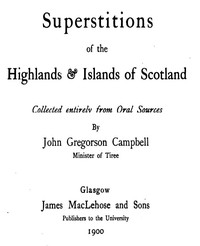
Superstitions of the Highlands & Islands of Scotland: Collected Entirely from Oral Sources
Written by John Gregorson Campbell
Chaptra reads alongside you — AI insights, chapter breakdowns and reader discussions for every book. Join free
About this book
Reading guide
Themes, characters and key ideas in Superstitions of the Highlands & Islands of Scotland: Collected Entirely from Oral Sources, written by Chaptra AI.
- about 12 hours
- advanced
- mysterious
- scholarly
- enchanting
John Gregorson Campbell's "Superstitions of the Highlands & Islands of Scotland" is a pivotal late 19th-century compendium meticulously collecting and documenting the rich oral folklore of the Scottish Highlands and islands. Focusing extensively on the prevalent beliefs surrounding fairies, the book delves into their multifaceted nature, societal structures, and profound influence on the daily lives of the Gaels. Campbell, drawing directly from spoken traditions, presents fairies as complex entities capable of both benevolence and malevolence, requiring specific precautions and understanding. This work serves as an invaluable ethnographic record, preserving a mystical landscape of belief and illustrating the enduring impact of ancient tales on Scottish culture.
“"The belief in fairies, or the 'Sìth,' was not a mere fancy, but a veritable part of the Highlander's daily existence, shaping his actions and fears."”
Key themes
- The Supernatural and Everyday Life
- This theme explores how the belief in fairies and other supernatural entities was not relegated to folklore but was deeply integrated into the daily fabric of Highland life. It covers how superstitions influenced decisions, explained natural phenomena, dictated social customs, and shaped individual perceptions of luck, misfortune, and destiny. The book demonstrates that the 'invisible world' was a constant, tangible presence.
- Cultural Preservation and Oral Tradition
- The book itself is a testament to this theme, as Campbell consciously collects and records oral traditions that were in danger of being lost. It emphasizes the critical role of storytelling and generational transmission in maintaining cultural identity, history, and communal wisdom. The act of documenting these superstitions preserves a unique worldview and a rich linguistic heritage.
- Fear, Awe, and Respect for Nature
- The superstitions reflect a profound relationship between the Highlanders and their natural environment. Nature is not merely a resource but a living entity, imbued with spiritual power, both benevolent and terrifying. Fairies and other spirits are often tied to specific natural features (hills, lochs, trees), demonstrating a deep-seated awe and a healthy fear of the untamed wilderness and its unpredictable forces.
Worth discussing
How does Campbell's methodology of collecting oral traditions influence our understanding of the superstitions, compared to literary interpretations?
Chapter-by-chapter breakdowns, character arcs and the full thematic analysis come with a free account.
Discussions
No one has started one yet
Questions this book opens up
No discussions yet
Be the first to start a discussion about this book!
Sign up to start the discussionReviews
No reviews yet
Be the first to review this book!